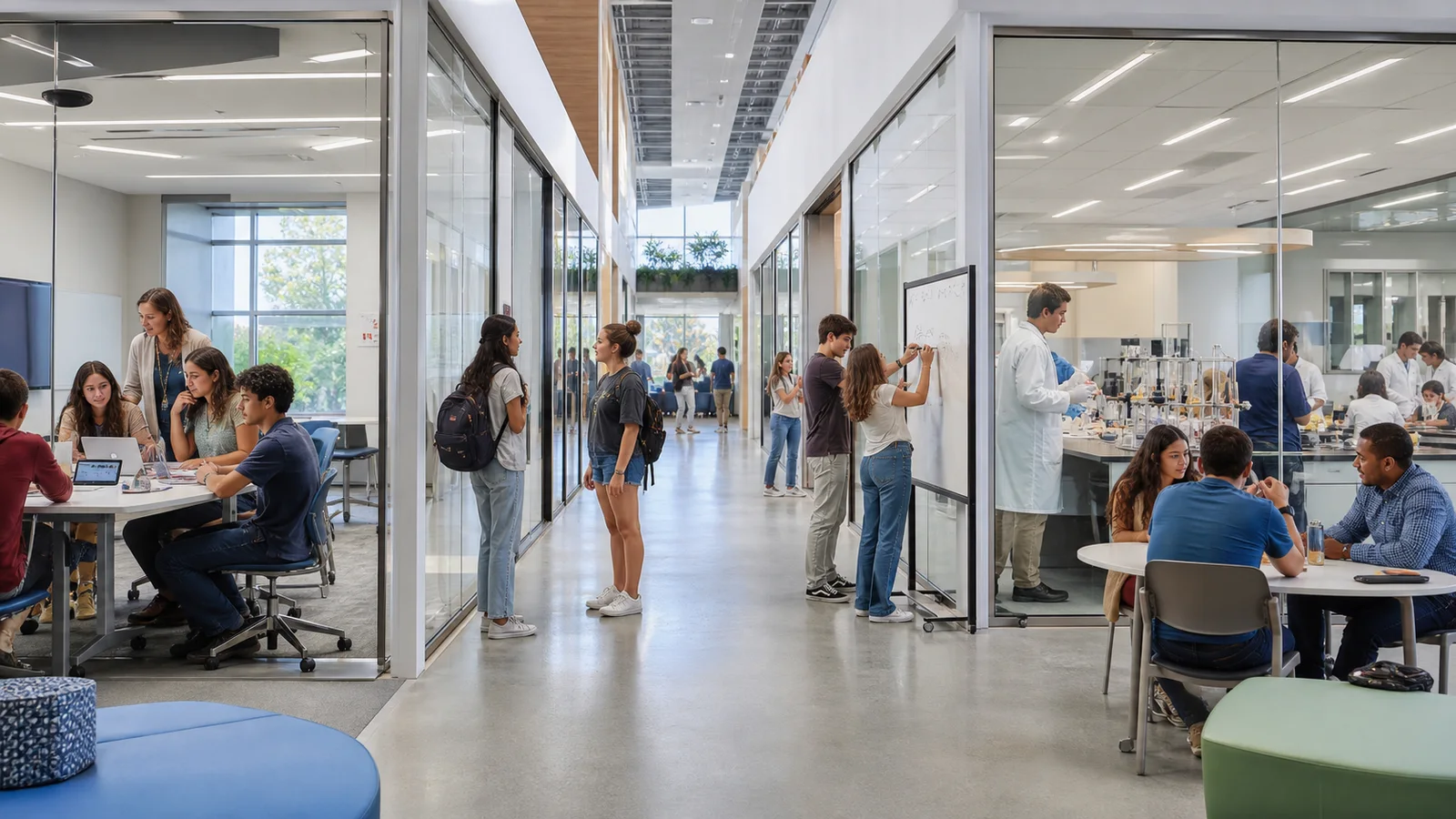

What Is a Boarding School? Daily Life, Rules, and Support
A boarding school combines classes with school-managed housing, meals, study time, supervision, and residential rules. See how the full week works.
A boarding school is a school where students live in school-managed housing during the academic term while attending classes on the same campus or within the same program. The school is responsible for more than lessons. It also organizes meals, study time, residential rules, adult supervision, and much of the student's life after class.
That definition is simple. Choosing boarding is not. Parents still need to understand who is present after dinner, how a student gets help at night, what weekends feel like, and whether the student is ready to manage more of daily life away from home.
The definition is simple. The handoff is not.
The neutral Cambridge Dictionary definition of boarding school focuses on students living and studying at the school. For a family, the meaningful difference is the handoff of responsibility.
At a day school, the institution usually hands the afternoon back to the family. Transportation, dinner, homework, activities, phone use, sleep, and emotional recovery happen at home. At a boarding school, many of those hours remain inside a supervised system.
That does not make boarding automatically more rigorous or more caring. It simply gives the school more responsibility for transitions that a day school may never see. The quality of the program depends on what adults do with those hours.
A boarding week includes the hours a day school hands back
Classes may end in the afternoon, but the boarding day continues through activities, dinner, evening study, free time, quiet hours, and bedtime. Weekends introduce another rhythm: campus activities, approved leave, transportation, meals, rest, and preparation for Monday.
Students do not need every minute scheduled. They do need to know which parts of the day are fixed, where choice begins, and who is available when the plan breaks down.
At ConcordPrep, residential life connects meals, supervised study, quiet hours, overnight staffing, weekend expectations, leave approval, transportation, and family communication. That makes the actual boarding routines and support as important as a photograph of the residence itself.
Families comparing the two models can also examine when boarding may make more sense than a day school. The useful comparison is not dorm versus bedroom. It is one complete weekday and one complete weekend in each setting.
The third week reveals more than move-in day
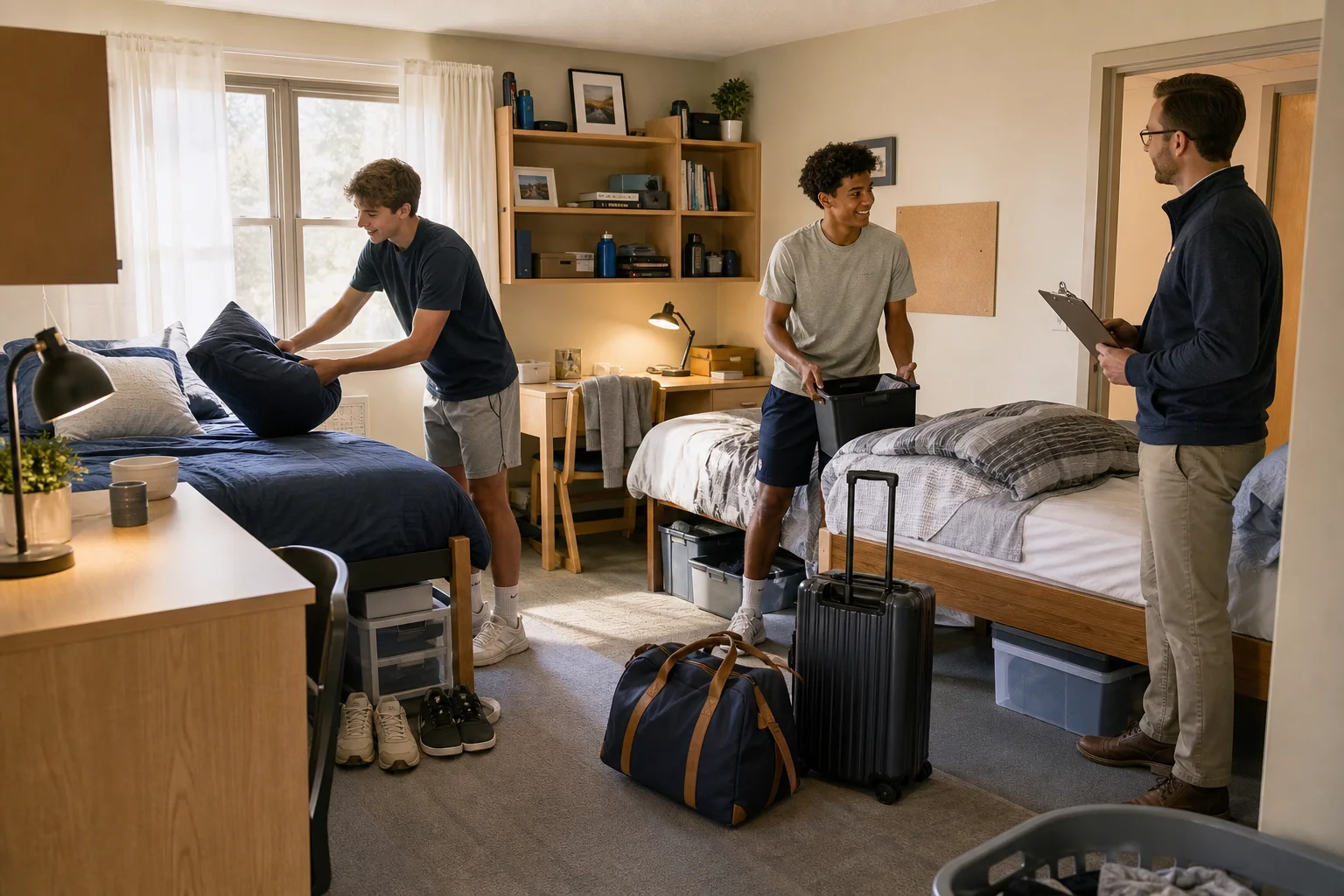
Move-in has adults, luggage, introductions, and a clear schedule. A few weeks later, novelty has worn off. Homework is real, sleep may be uneven, a roommate habit may be irritating, and the student has to decide whether to ask for help.
Homesickness can appear in a student who wanted to board. So can relief, new confidence, or fatigue from being around peers all day. Adjustment is not measured by whether the student sounded happy during the first phone call.
Residential and academic adults need enough contact to notice patterns: missed meals, unfinished work, withdrawal from activities, repeated late nights, or a student who looks engaged in class but disappears socially afterward. Parents need a communication rhythm that supplies useful context without managing every ordinary discomfort from a distance.
Supervision lives in ordinary rules
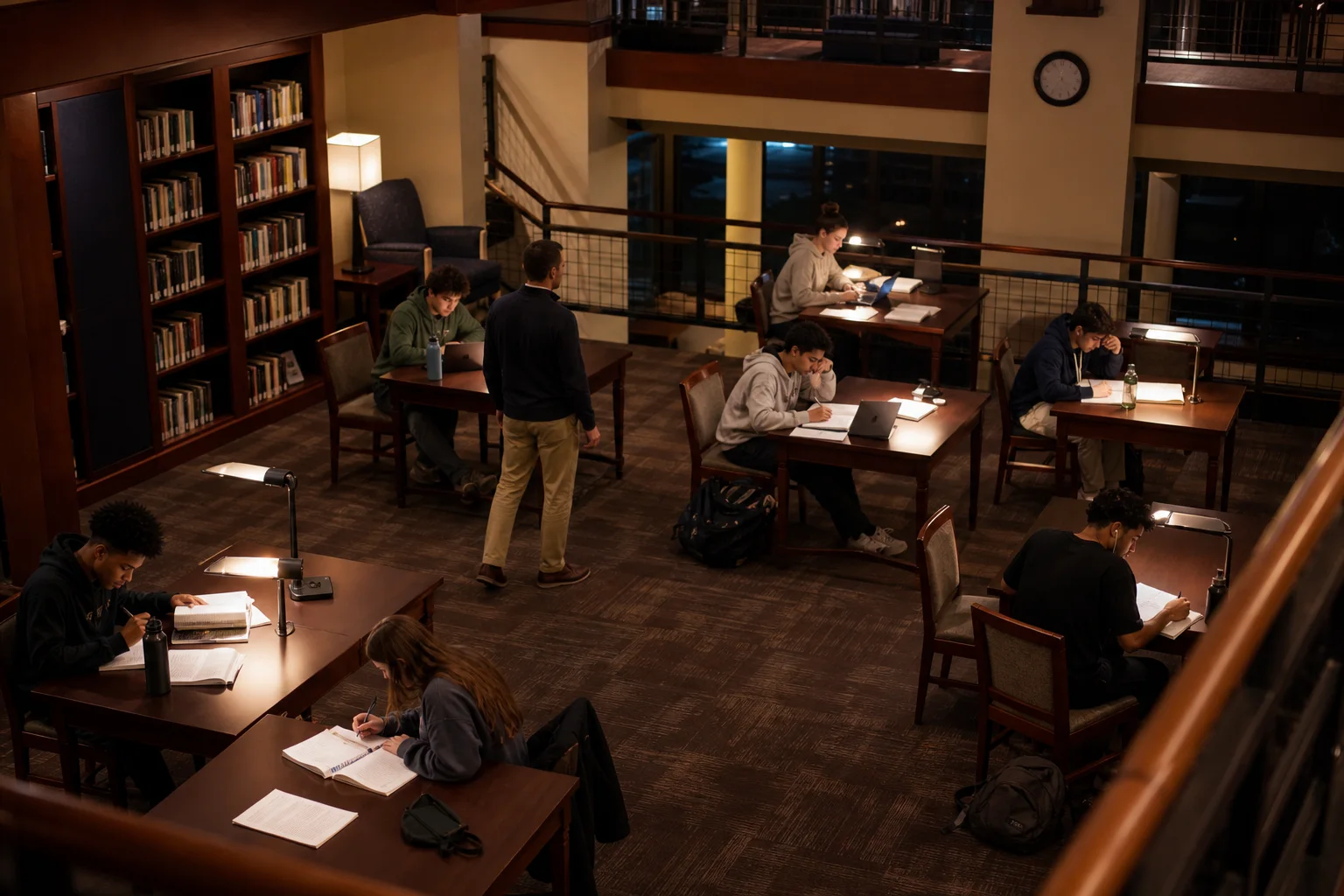
Boarding supervision is often easiest to understand through small, repetitive questions. Who is on duty overnight? How is attendance checked? When does the residence become quiet? How does a student request weekend leave? Where is medication stored? What happens when a student returns late?
Answers should identify a person, a time, or a procedure. Words such as safe, supportive, and caring express an intention; they do not explain how the residence operates on a Tuesday night.
Device expectations matter for the same reason. A rule about phone check-in or quiet hours is not just a restriction. It influences sleep, study, roommate relationships, and the ability of staff to maintain a common routine. Families should decide whether the structure is appropriate for their child, not whether every rule matches the rules at home.
Academic support must cross the residence door
A dormitory provides housing. A boarding program should connect housing to learning without turning the residence into another classroom.
Consider a student who understood Monday's math lesson but avoided the homework that night. The teacher sees a missing assignment on Tuesday. The residential adult saw an unfocused study period on Monday. An advisor may know that the student is also sleeping poorly. When those observations remain separate, each one looks small. When the adults can connect them, support can begin before the grade becomes the only signal.
At ConcordPrep, academic support includes structured study time for boarders, tutoring, advising, progress communication, and a 1:6 teacher-to-student ratio. Families should still ask how a student enters that support: whether help is scheduled, requested, recommended, or triggered by a pattern.
Advanced options need the same scrutiny. The current course pathways and Early College opportunities matter only when the student's schedule, study habits, and readiness make the work sustainable.
Independence grows through repeated responsibilities
Boarding students practice independence through ordinary tasks: waking up, keeping track of materials, doing laundry, sharing a room, arriving on time, speaking to an adult, and recovering after a difficult day.
The school still provides structure. The student gradually carries more of the routine inside that structure. That is guided independence, not the sudden removal of support.
A student may be academically capable and still need coaching around organization or communication. Another may manage homework well but struggle with shared space. Readiness is therefore broader than grades. It includes the ability to accept feedback, follow common rules, repair a conflict, and let an adult know when something is not working.
Boarding is not therapeutic placement
A college-preparatory boarding school is not a residential treatment center, therapeutic school, or behavior-correction program. These settings have different purposes, staffing, clinical responsibilities, and admissions criteria.
If a student needs crisis care, substance-use treatment, intensive mental-health treatment, or specialized behavioral intervention, families should speak with licensed professionals rather than assuming a regular boarding program can provide that service.
Boarding may still help a student who benefits from a predictable schedule, accessible academic help, fewer transportation gaps, or a gradual increase in responsibility. The distinction is whether the primary need is educational and residential structure or clinical treatment.
Readiness matters more than prestige
A student does not need to be completely independent before boarding. They do need enough willingness to participate in a shared routine.
Useful readiness signals are often modest. The student can ask a question after being confused, accept a limit without turning every disagreement into a prolonged fight, complete basic self-care, and tell the truth when work is missing. They can be homesick and still remain open to the next day.
A day school may be the stronger choice when the home routine is stable, the commute is manageable, and returning home helps the student reset. Boarding may deserve closer consideration when commuting drains the day, the family lives far away, or the student is ready to use a more connected academic and residential week.

Picture one complete week
Before making a decision, picture the student after the last class, after dinner, during evening study, at bedtime, on Saturday afternoon, and before the first trip home. For each moment, identify what the student is expected to do, which adult is available, and how the family would learn about a concern.
Then picture one imperfect week: a low quiz grade, a roommate disagreement, a missed assignment, poor sleep, or a delayed return from a weekend. A boarding program becomes understandable when the response to those ordinary disruptions is as clear as the daily schedule.
That is what a boarding school adds to education: not merely a place to sleep, but a residential system around the hours when students study, make decisions, live with peers, and learn to use support. Whether that system is the right one depends on the particular school and the particular student.