
The Private School Interview Is Not an Audition
Prepare for private school interview questions without scripts. Help students use honest examples, ask useful questions, and judge whether the school fits.
A private school interview is often a student's first formal conversation with an adult who is deciding something important. That can make the room feel like a stage: sit straight, give the polished answer, avoid saying the wrong thing.
But an interview built only from polished answers is not very useful. The school already has grades, records, and forms. The conversation adds what those documents cannot show: how the student thinks aloud, describes a challenge, responds to a follow-up, and imagines participating in the community.
The most effective preparation for private school interview questions is therefore not memorization. It is learning to retrieve honest examples without turning them into a performance.
The application has facts; the interview adds a voice
A transcript can show that algebra was difficult last year. It cannot show whether the student sought help, changed a study habit, blamed the teacher, or became more interested in the subject after finally understanding it.
An activity list can name robotics. It cannot show whether the student loved designing, debugging, organizing the team, or simply attended because a friend was there.
Interviewers use conversation to add context to the file and explore whether the school and student can work well together. Admission.org explains that parent interviews also help schools understand the student's circumstances and educational goals, while giving parents a chance to evaluate the school.
That two-way purpose changes the preparation. You are not trying to produce the one answer that earns admission. You are trying to make the real student easier to understand and gather information the family needs before enrollment.
Prepare a shelf of stories, not a script
Common questions tend to circle a few themes: interests, school experience, challenge, community, independence, and the reason for considering a change. One true story can illuminate several of them.
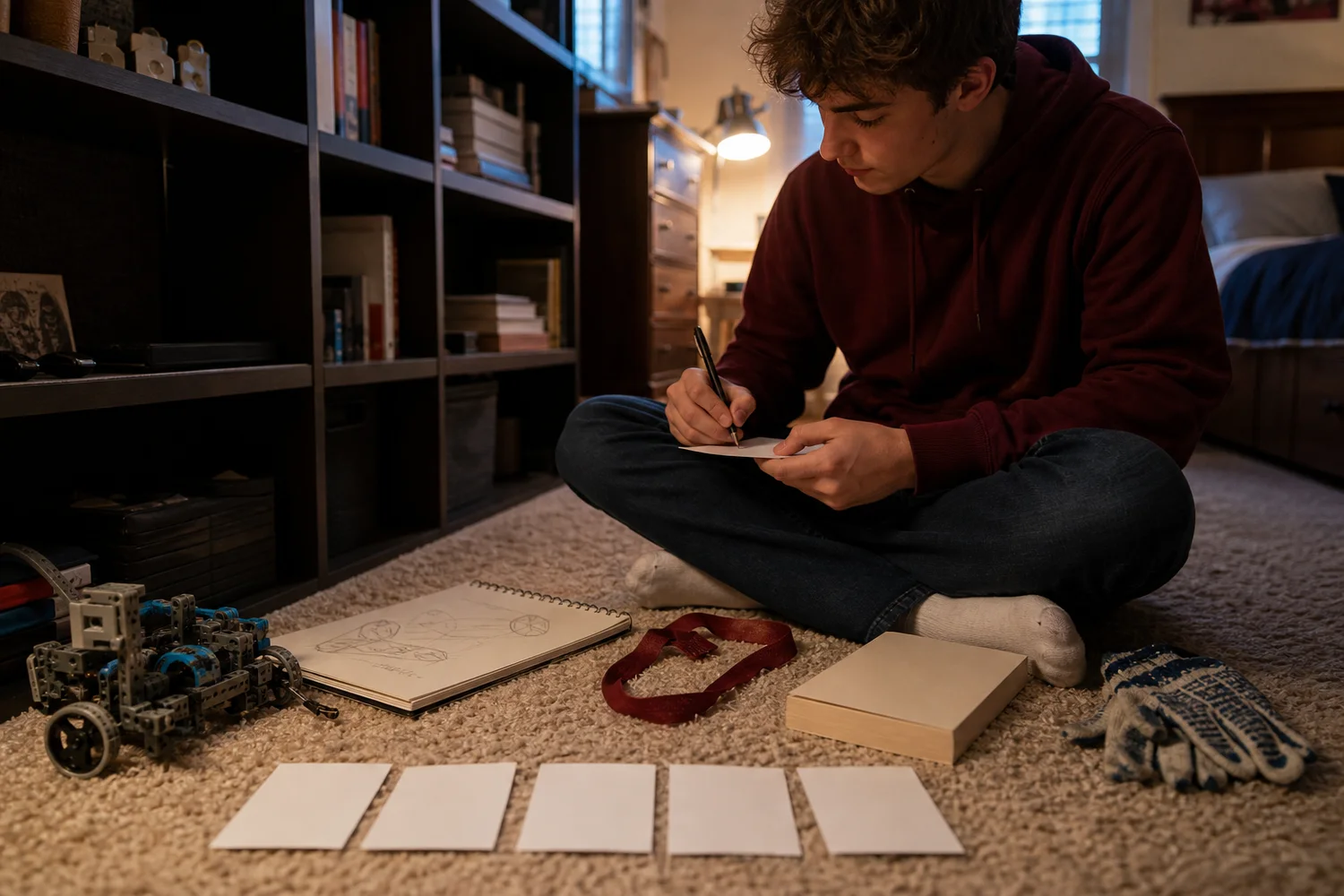
A useful preparation session might identify five moments:
- a class or project that created genuine curiosity;
- a setback that required a change in approach;
- a contribution to a team, family, club, job, or community;
- a time the student asked for help or handled disagreement;
- something the student wants to explore at the next school.
For each moment, remember what happened, what the student did, and what changed afterward. Do not write a speech. If every sentence is memorized, a slightly different question can make the student lose the entire answer.
Specific answers are easier to trust
Compare “I am passionate about science” with “I kept getting different water-quality readings, so I rebuilt the collection setup and learned that I had contaminated one of the samples.” The second answer is not stronger because it sounds more impressive. It is stronger because the interviewer can see the student's curiosity and response to error.
Details also protect the student from generic language that could belong to anyone. If the student says a small school is appealing, what would become possible in a smaller class? If boarding is under consideration, which part of living away from home feels exciting and which part feels uncertain? If academic support matters, describe how the student currently uses feedback instead of promising to “work harder.”
Honesty includes limits. “I have not done that yet, but I would like to try” can be more credible than stretching a minor experience into leadership.
The student and parent have different work to do
The student needs room to own the student interview. A parent who corrects dates, supplies forgotten achievements, or answers from the waiting area can unintentionally demonstrate that the student has little control over the story.
The parent conversation has a different purpose. It can explain context, clarify what prompted the school search, describe the student's learning patterns, and examine whether expectations on both sides are compatible. Difficult information belongs here when it materially affects the student's experience. It does not need to be hidden until after enrollment.
Before the interview, agree on facts that could otherwise sound contradictory: why the family is considering a move, what support has been useful, whether boarding is the student's choice, and which concerns remain unresolved. Agreement does not require identical wording. It prevents two unrelated narratives from entering the same application.
The viewpoints may still differ. A parent may describe repeated late assignments while the student describes difficulty deciding where to begin. One statement supplies a pattern; the other reveals how the student experiences it. That difference is useful when both people speak plainly. It becomes a problem only when the family has rehearsed a tidy explanation that leaves the school unable to understand what support or change is actually needed.
A pause is not a failed answer
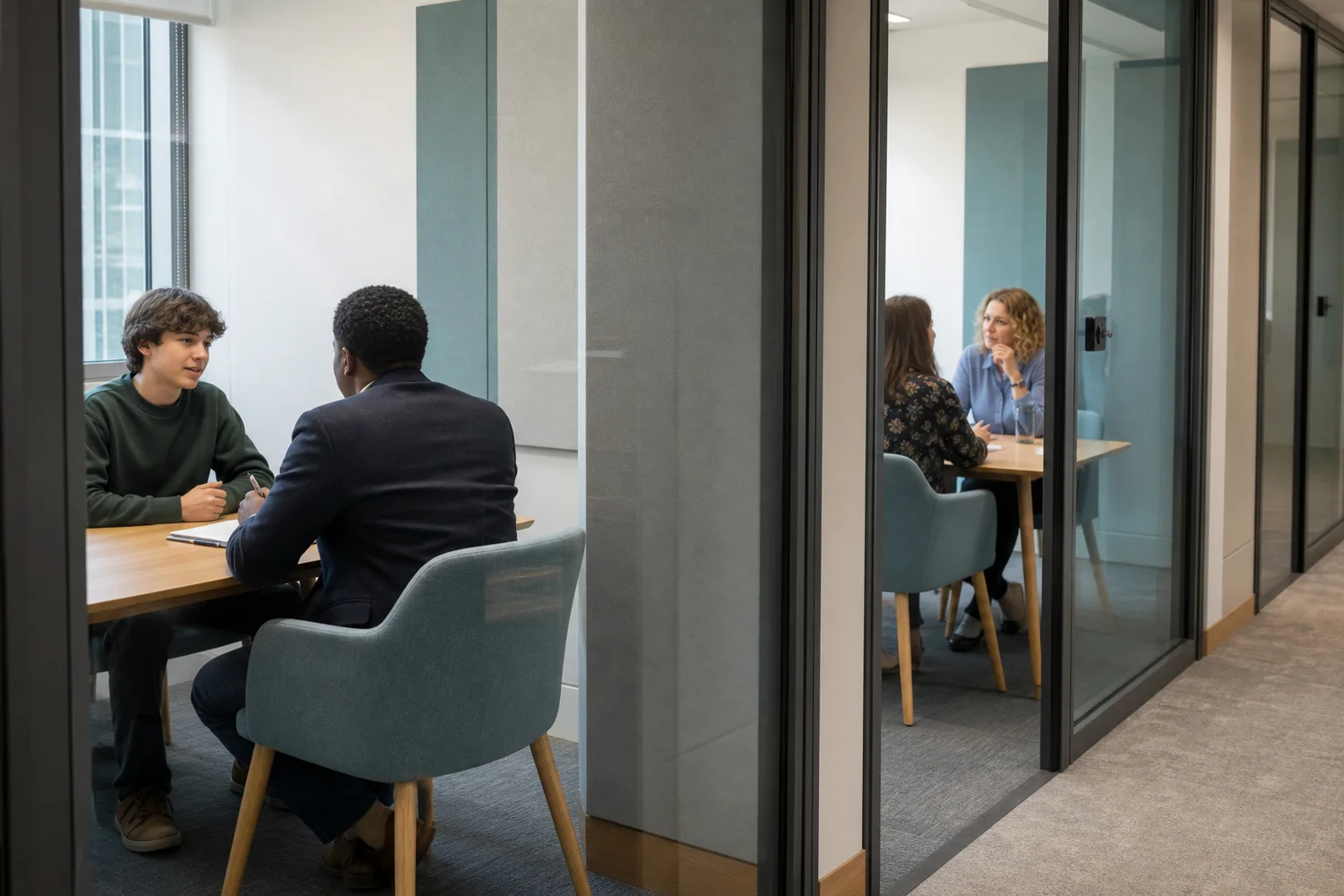
Teenagers do not usually speak in admissions-brochure paragraphs. They restart sentences, think, and occasionally say they need a moment. A thoughtful pause is preferable to a fast answer that means nothing.
Practice the mechanics of conversation instead: listen through the end of the question, ask for clarification when needed, give one concrete example, and stop when the answer is complete. If the interviewer follows up, treat it as interest rather than proof that the first answer was wrong.
Interview length varies by school and student age, and the interview may sit inside a longer visit that includes a tour or introductions. Knowing the day's format helps a nervous student picture the sequence without trying to control every question.
Bring questions the website cannot finish
“Do you offer AP classes?” can usually be answered before the interview. A better conversation begins where the public information stops.
A student interested in an advanced course might ask how placement works when prerequisite material came from another school. A new boarder might ask what students tend to do during the first unstructured weekend. A student who has needed reminders might ask how assignments and missed work are communicated.
The answers help the student imagine participating, not merely being accepted. At ConcordPrep, the current application process includes an interview alongside records, testing, and other required materials. The existing application timeline can keep the interview, recommendations, records, financial aid, and later enrollment work from collapsing into one deadline.
Write down what changed after the conversation
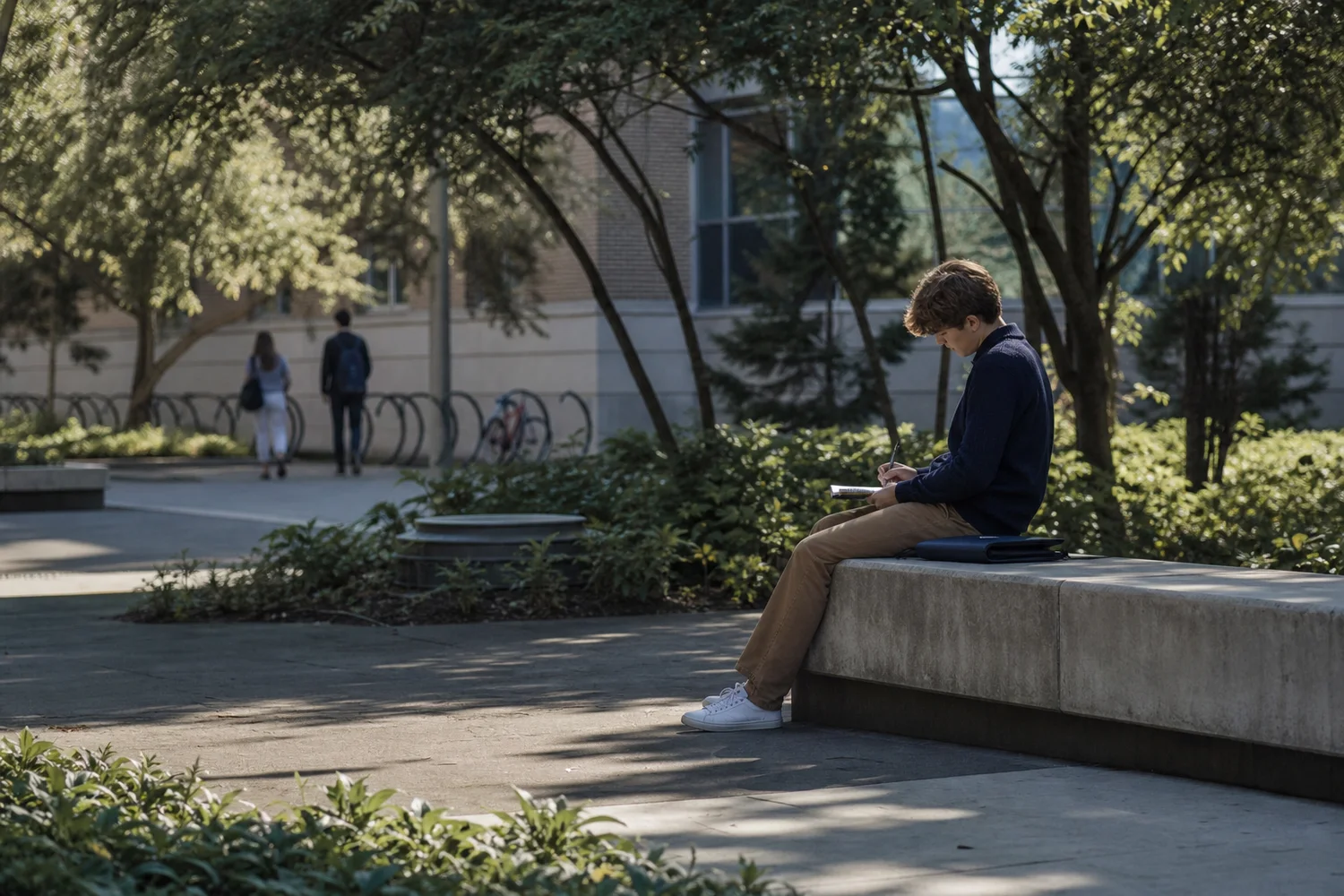
Within an hour, ask the student to record three things: an answer that felt true, something learned about the school, and one concern that remains. The parent can make a separate note. Compare them later, after the pressure of the interview has passed.
This produces more useful evidence than asking whether the interview “went well.” A warm interviewer can make an unsuitable school feel attractive for an afternoon. A nervous start can obscure a conversation that eventually revealed strong alignment.
Private school interview questions are useful when they expose a real match or mismatch. The student does not need to become a more marketable version of someone else. The family needs enough candor to understand what the school would be asking this particular teenager to do every day.
Private school interview FAQ
Does every private school require an interview?
No. Requirements vary by school, entry grade, applicant type, and admission cycle. Confirm whether the interview is required, who participates, and whether it occurs before or after the rest of the application.
Should a student practice common interview questions?
Yes, but practice should focus on retrieving true examples and speaking clearly rather than memorizing model answers. One or two short practice conversations are usually more revealing than repeated rehearsals.
What should a student bring?
Follow the school's instructions. Unless requested, a large portfolio is unnecessary. Bring any required document, a short list of genuine questions, and enough knowledge of the school to explain the interest in specific terms.