

Your Private High School Application Timeline Starts Before the Form
Build a private school application timeline for records, recommendations, assessments, financial aid, decisions, and enrollment without last-minute gaps.
A private school application timeline does not begin when the online form opens. By then, several parts of the application may already depend on other people: a registrar has to release records, teachers need time to write recommendations, testing dates may be filling, and the family may still be deciding whether boarding or financial aid changes the plan.
The useful starting point is the date the family cannot move. Work backward from the school's deadline, then give each outside contributor enough room to complete their part without an emergency email.
Start with the date you cannot move
Schools do not all use the same admission calendar. Some review complete files in rounds, some have a priority deadline, and some continue reviewing applications as space allows. Requirements can also change by grade, applicant type, and time of year.
Record the exact deadline shown by each school and identify what “complete” means there. A submitted family form may not be a complete application if transcripts, recommendations, assessments, interviews, or financial aid documents are still missing.
The Enrollment Management Association's explanation of the Standard Application Online shows how applicant information, essays, transcripts, and recommendations can move through a common system, but each school's current instructions remain controlling. At ConcordPrep, the admission process includes an inquiry, application, supporting documents, assessment or interview when required, and a holistic review. That sequence is more useful for planning than a single “submit by” date.
August and September are for building the file
Early work should reduce uncertainty, not create polished answers for a portal that may not be open yet.
- Create one list of candidate schools, entry grades, application deadlines, and financial aid deadlines.
- Check which years of academic records are required and whether unofficial copies can begin the review.
- Identify the teachers or school officials who may be asked for recommendations.
- Note interviews, student writing, placement assessments, English proficiency, or other applicant-specific requirements.
- Decide whether day attendance, boarding, transportation, or international travel adds a second planning track.
This is also the right stage to look past the school name and compare the academic environment. Course availability, placement practices, workload, learning support, and graduation requirements will shape the student's week after admission. ConcordPrep families can review the current range of courses and placement context before deciding which questions belong in the application process.
Location may narrow the list, but it should not make the final choice by itself. The distinction between commute convenience and academic, support, and schedule fit is worth resolving before recommendation requests go out.
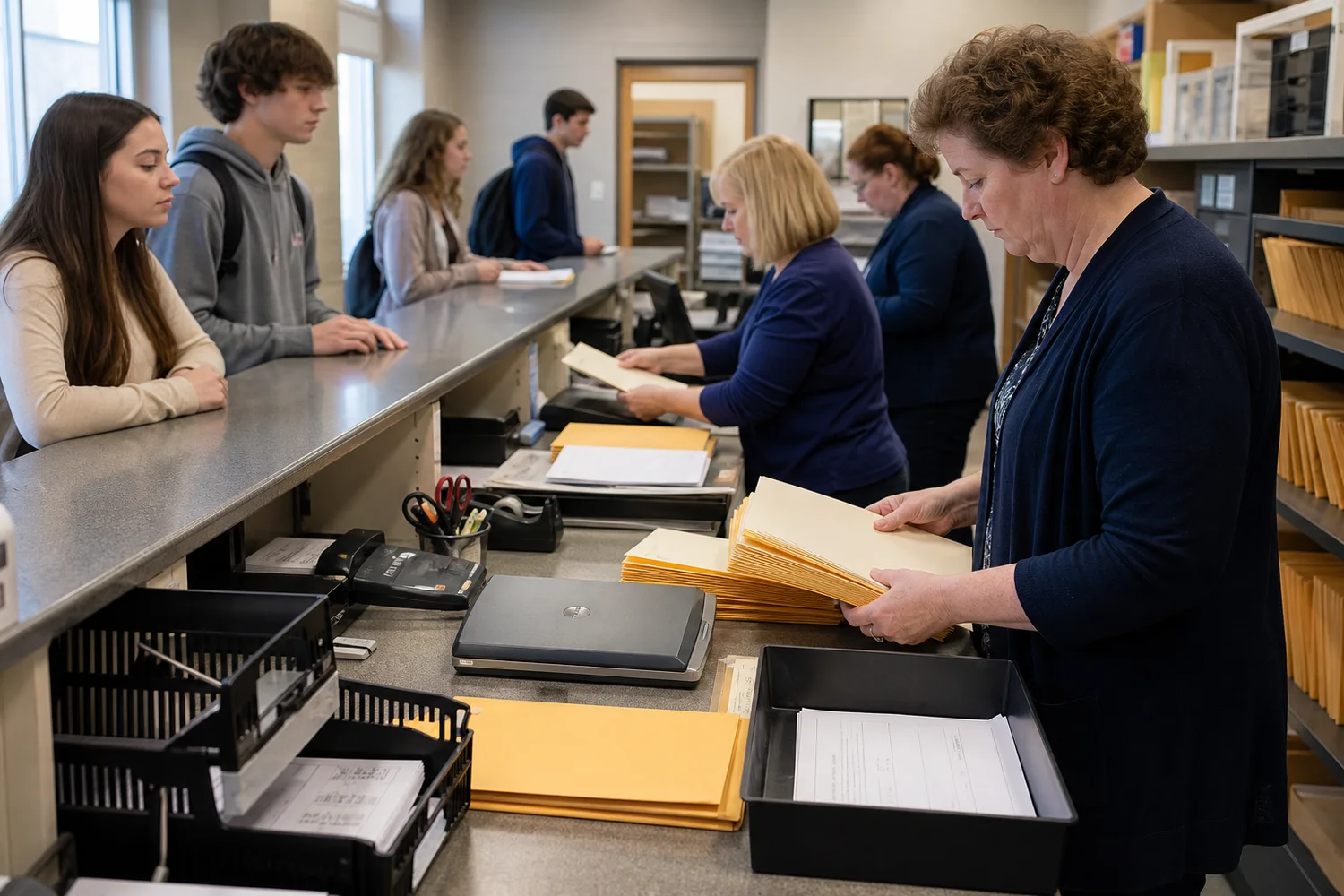
Recommendations belong to someone else's calendar
A teacher recommendation is not another family essay. Its value comes from an educator describing how the student learns, participates, handles feedback, and contributes to class.
Ask the right teacher, not simply the teacher most likely to write praise. Give the recommender the official instructions, deadline, delivery method, and enough notice. Do not draft the recommendation for them. A brief reminder of the student's intended entry grade and school list is usually more useful than a page of suggested adjectives.
Build in a private checkpoint several days before the official deadline. The goal is not to pressure the teacher; it is to notice whether an invitation was never received, went to spam, or requires a different submission route.
Assessment and placement are different decisions
An admission assessment helps a school understand readiness for entry. Course placement determines where an enrolled student should begin in a particular subject. Families create unnecessary stress when they treat both as a contest to reach the highest available level.
Before preparing, ask what the assessment measures and how the result is used. If the school reviews transcripts, teacher feedback, writing, interviews, and placement information together, one score is unlikely to tell the whole story. At ConcordPrep, application materials are considered through a holistic review rather than a single-number formula.
After an offer, placement questions may still remain. A student who took Algebra II under one curriculum may not have covered the same sequence as a student with the same course title elsewhere. The better question is whether the starting course gives the student enough challenge without creating gaps that surface six weeks later.

A visit has one job in the timeline
A campus visit is useful when it resolves a question the website cannot. It does not need to become the ceremonial ending of every school search.
Schedule it early enough that the answer can still change the school list. A student wondering about workload might ask how a difficult week is handled. A boarding family might need to understand evening study and weekends. A student transferring midyear may need clarity on credits and course continuity.
Write down the unresolved question before arriving. If the family leaves with better photographs but no better decision, the visit occupied the calendar without advancing the application.
Financial aid and boarding run on parallel tracks
Admission, affordability, and residential logistics are connected, but they are not always decided through the same form or on the same date.
Check the school's current tuition, fees, and aid information while the application list is still flexible. Note separate aid documents, tax or income records, translation needs, and whether an award can be considered after an admission decision. Do not assume an admission deadline automatically protects an aid deadline.
Boarding applicants also need time for housing availability, health records, transportation, break travel, and move-in instructions. International applicants may have an additional visa process after school admission. Those tasks should appear beside the academic application, not beneath it as an afterthought.
An offer starts a second review
An acceptance is not the end of the timeline. It begins a shorter, more consequential period for reading the enrollment agreement, comparing financial terms, confirming course placement, and resolving practical questions.
The Admission.org discussion of offers, waitlists, and denials shows why each outcome requires a different family decision. Families should also note the enrollment deposit deadline and whether records, health forms, or housing steps have separate due dates after acceptance.
This is when academic support deserves a specific conversation. If the student has relied on tutoring, accommodations, frequent teacher reminders, or a carefully managed homework routine, confirm how those needs would work in the new setting. At ConcordPrep, study sessions, advising, tutoring, and progress communication give families concrete areas to discuss before signing.
Give every application a control sheet
Use one line per requirement and four fields: owner, request date, due date, and confirmed received. “Parent,” “student,” “teacher,” “registrar,” and “school” are clearer owners than “we.”
We prepared this free application control sheet for parents who want one place to track requirements, deadlines, and next steps.

Then add the decision-stage dates: financial aid response, enrollment deposit, placement follow-up, health records, housing confirmation, and withdrawal notice to the current school. A weekly ten-minute review is usually enough when the sheet was built early.
A strong private school application timeline does not make the student look more manufactured. It protects the time needed for accurate records, independent recommendations, honest conversations, and a thoughtful decision. When every item has an owner and a confirmation point, the family can spend less energy chasing paperwork and more energy deciding whether the school actually fits.