
Looking for Private High Schools Near Irvine? Start With Fit, Not Distance
Compare private high schools near Irvine by academic fit, support, college planning, campus visit questions, and whether the school can match your student‘s next four years.
Searching for private high schools near Irvine can turn into a map exercise faster than most families expect. A shorter drive is easier to picture. A familiar city name feels safer. A campus that appears close in a directory naturally moves onto the shortlist.
That is a reasonable first filter. It is not a complete school decision.
High school fit is more specific than proximity. The better question is whether a school is close enough to visit, close enough to make the weekly routine realistic, and close enough to your child's actual academic needs that the next four years can be planned with care.
For Irvine-area families, that can include schools in Irvine, Costa Mesa, Newport Beach, Tustin, Santa Ana, and other parts of Orange County. The map helps you narrow the field. The visit, the student conversation, and the support model decide whether a school belongs there.
Distance Narrows The List. It Does Not Explain The School Week.
A school directory can show address, grade range, enrollment, and sometimes basic program details. It cannot show how the school responds when a ninth grader is misplaced in math, when a strong reader avoids writing, or when a student who looked confident on the tour becomes quiet during the first month.
That is why location needs to be paired with fit. A school twenty minutes closer may still be the wrong environment if the academic plan is vague. A school a little farther away may be worth the drive if it can explain placement, support, counseling, and the daily rhythm more clearly.
The National Association of Independent Schools encourages parents to define the right school around the child, not simply collect names from a list. That lens helps when several private schools near Irvine look similar online.
Use distance as a practical boundary. Then ask what the school week would actually feel like for your student.
Start With The Student You Have This Year
A good private high school conversation begins with the current student, not the school's strongest brochure points.
Bring the transcript, but do not let the transcript do all the talking. Grades show outcomes. They do not always show the work pattern behind them. One student may have high grades because the workload has been too light. Another may have uneven grades because the student is capable in class but slow to start long assignments. A third may test well, read quickly, and still need coaching on planning, revision, or asking for help.
For an Irvine family comparing college prep options, that starting profile matters more than a generic promise of rigor. The school needs to know where the student is entering high school academically, how much structure the student can handle, and which part of the first semester is most likely to need attention.
When you speak with Admissions, a stronger conversation gets concrete: current grade, recent courses, strongest subjects, weaker habits, day or boarding interest, college goals if they already exist, and what kind of school environment has or has not worked before.
If the answer stays at "we have strong academics," keep asking. A stronger admissions conversation can describe how the student would enter the academic program, how placement is reviewed, and what adults would watch in the opening weeks.
A Support Claim Is Only Useful When It Has A Loop
Almost every private high school says support is available. The phrase is too broad to be very useful by itself.
A support loop is what turns a promise into daily practice. A teacher sees a pattern. An advisor understands whether it is skill, effort, confidence, or pacing. Tutoring or study support gives the student a next step. Parents hear enough to stay aligned. The plan is revisited before the problem becomes the semester's main story.
At ConcordPrep, academic support includes several moving parts that matter in real school weeks: a 1:6 teacher-to-student ratio, structured study sessions and academic check-ins for boarding students, weekly progress reviews, advising, tutoring, and parent communication on academic standing.
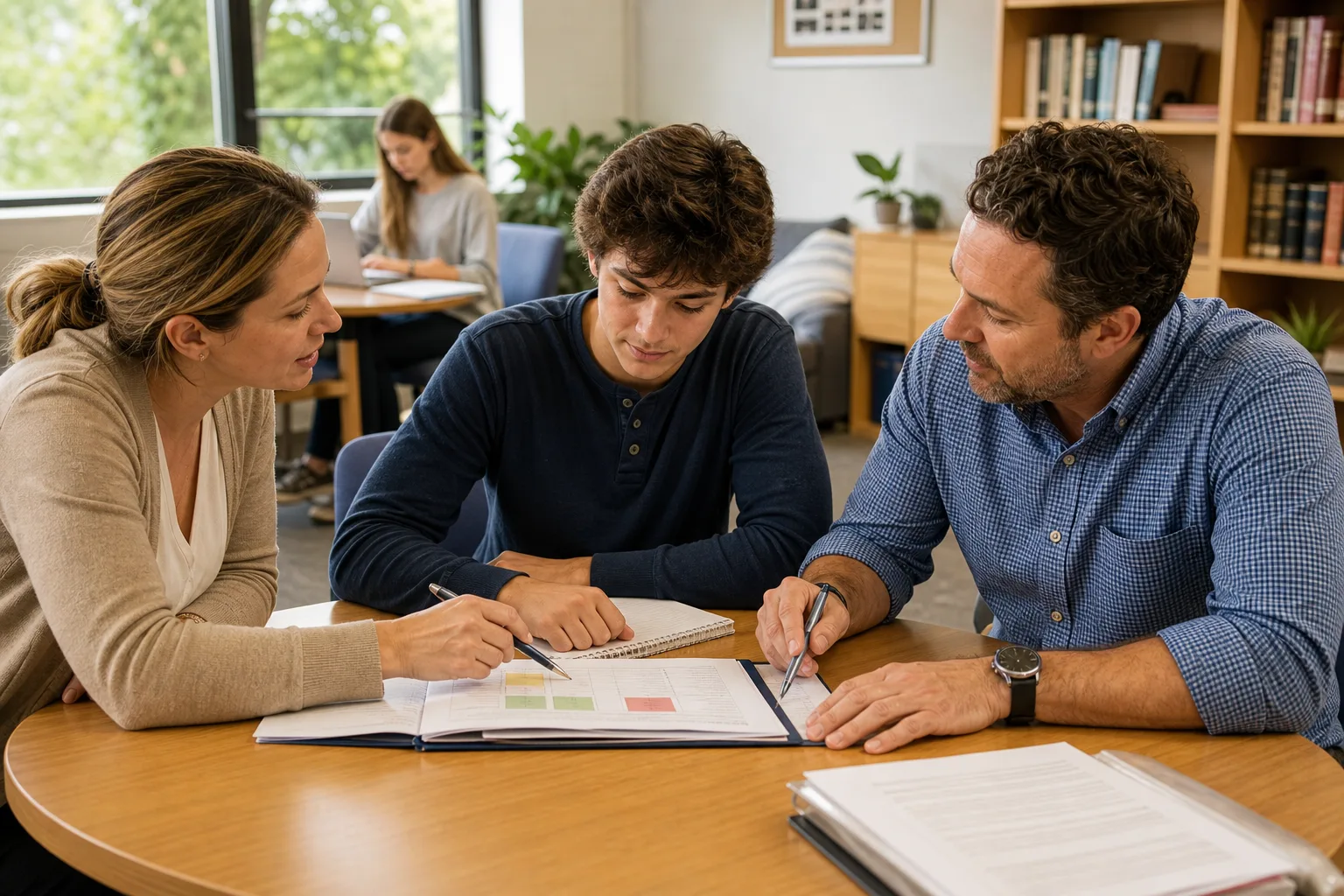
Those details should be translated into your child's likely week. If your student has strong ability but inconsistent follow-through, ask how the school distinguishes a missed assignment from a developing pattern. If your student is moving into a heavier writing load, ask what feedback looks like before grades drop. If your student will board, ask how evening study connects back to classroom expectations. If your student will commute from the Irvine area, ask where help fits into the school day rather than assuming it happens only after a student requests it.
Support is not valuable because it is listed somewhere. It is valuable when the school can explain who acts, how quickly, and how parents are brought into the picture.
College Prep Should Begin Before The Application Season
In competitive Orange County school searches, "college prep" can become a shorthand for pressure. That is not enough. A college preparatory high school should help a student build a stronger academic record over time, not merely survive a harder schedule.
At ConcordPrep, college counseling begins in grade 9 and builds through course selection, extracurricular planning, family communication, essays, application preparation, and senior-year decisions. For parents, the important part is timing. If counseling begins early enough, course choices and activity choices can become part of the student's actual development rather than a last-minute application story.
That matters for students with different profiles. A student aiming at engineering may need a careful math and science sequence. A student with humanities strength may need writing depth, discussion-based courses, and evidence of sustained intellectual work. A student still rebuilding confidence may need a first-year plan that protects momentum before adding more advanced options.

If acceleration is part of the conversation, talk through the Early College Program with the same caution. Students may be able to pursue dual enrollment pathways, an official college transcript, potential transferable units, and UC TAG planning when they are eligible. Those are meaningful opportunities for the right student. They also require readiness, workload control, and a clear understanding of how high school requirements and college-level coursework fit together.
For families near Irvine, where UC and selective university planning can dominate the conversation early, this is the distinction to hold onto: acceleration is useful only when it is guided. The goal is not to collect the most intense labels. The goal is to build a transcript and a student who can support each other.
Use The Visit As A Field Test
A campus visit should do more than confirm that the school looks good in person. It should test the parts of the week that online photos and program summaries cannot fully show.
Drive there at a realistic time if your student may commute. Notice whether the arrival feels manageable on a normal school day, not just during an appointment window. Look at where students study between classes, how adults describe academic help, and whether the learning spaces match the type of school the family is being promised.
For ConcordPrep, a campus visit should help families connect the Costa Mesa setting with facilities, support, boarding, transportation, and enrollment planning. Before visiting, look closely at Campus & Facilities so you know which everyday spaces you want to see in person.
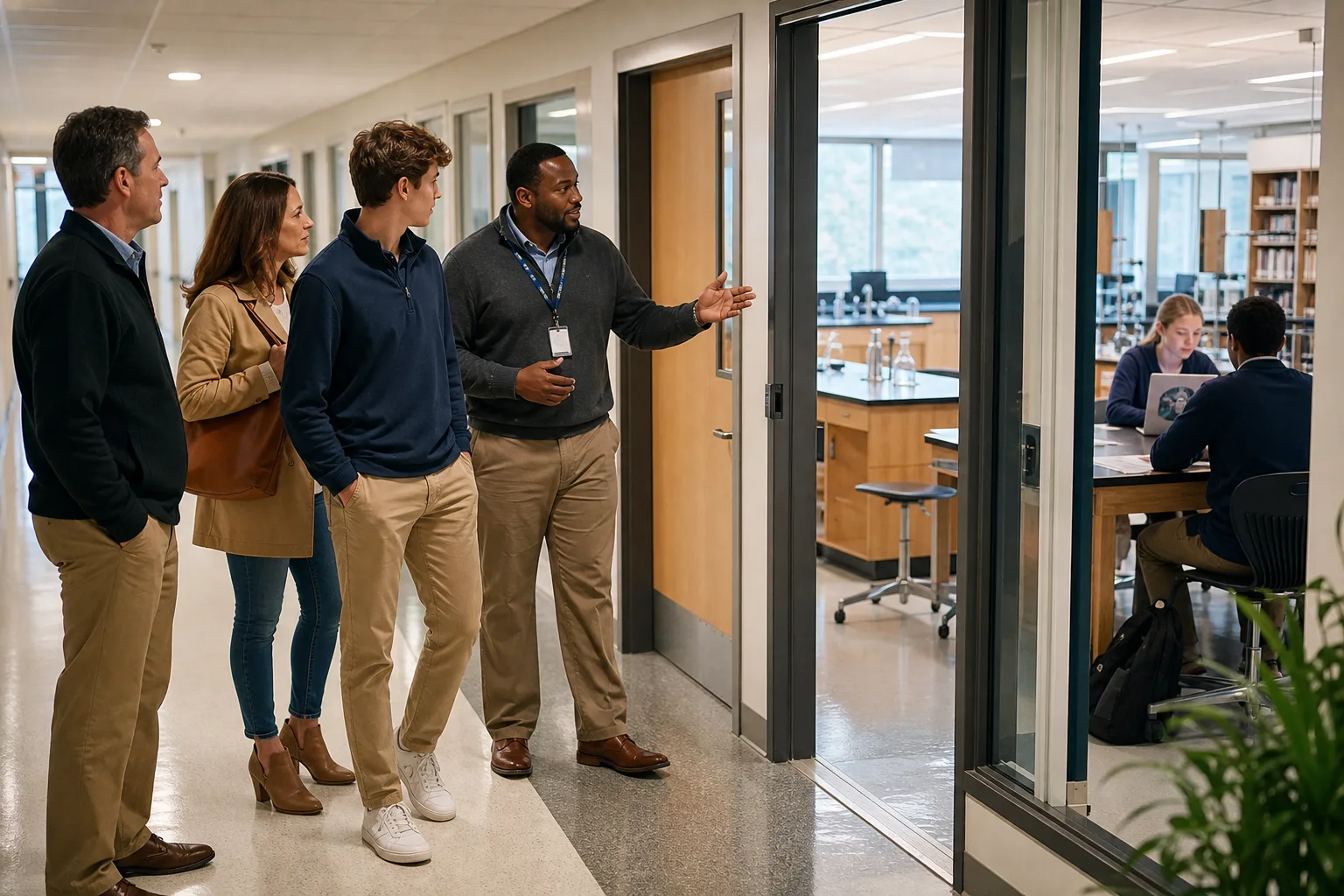
During the visit, bring a real student profile instead of a generic question list. Ask how the school would think about the first semester. Ask where the student would likely begin in English, math, science, and electives. Ask what the school would watch during the first grading period. Ask how the student would get help without turning every problem into a family emergency.
The answer does not need to be a final schedule. It should feel like a thoughtful first draft.
Use Directories Carefully
Directories and public data tools can be helpful at the discovery stage. They are weaker as decision tools.
California's Private School Data comes from annual Private School Affidavit reporting, and the state cautions that inclusion in those reports should not be read as evaluation, approval, or endorsement. The NCES Private School Search data is based on schools responding to the Private School Universe Survey.
That distinction matters. It keeps families from treating a directory result as a recommendation.
Rankings, acceptance-rate lists, and broad "top schools" roundups have a similar limitation. They may help you discover names, but they rarely explain whether a particular student will be known well, placed correctly, supported early, and guided toward an academic path that fits.
If you use a list of private schools near Irvine, turn it into a working shortlist. Then replace the list with direct conversations.
When ConcordPrep Belongs On The Shortlist
Concord Preparatory School may belong on the shortlist for Irvine-area families who are open to a Costa Mesa campus and want a smaller college-preparatory environment with academic support, college counseling, Early College pathways, and both day and boarding context to discuss.
It will not be the right answer for every family. A student looking for a much larger campus, a specific religious tradition, a specialized arts conservatory, or a therapeutic/behavioral placement needs a different kind of search. A family that wants the shortest possible drive above all else may also choose differently.
But if the family is comparing private high schools near Irvine because the student needs a more intentional high school plan, ConcordPrep is worth evaluating directly. Start with the student's current record, then discuss Academic Support, College Counseling, Early College, and a campus visit as one connected student plan.
If cost is part of the comparison, use ConcordPrep's tuition information alongside the existing guide to private high school tuition in Orange County. Price only becomes useful when it is connected to the student's likely experience.
A Practical Way To Decide
After each school conversation, write four short notes before the details blur together.
- What would the student's first semester likely look like?
- Where would the student be challenged?
- Where would the school notice and respond if things became uneven?
- What part of the four-year path became clearer after the visit?
If those answers are specific, the school has given you something useful. If they stay vague, the school may still be attractive, but the family does not yet have enough information to choose well.
Private school search near Irvine starts with location. The stronger decision comes from fit: the student's starting point, the support loop, the college-planning sequence, and the daily school week your child would actually live.