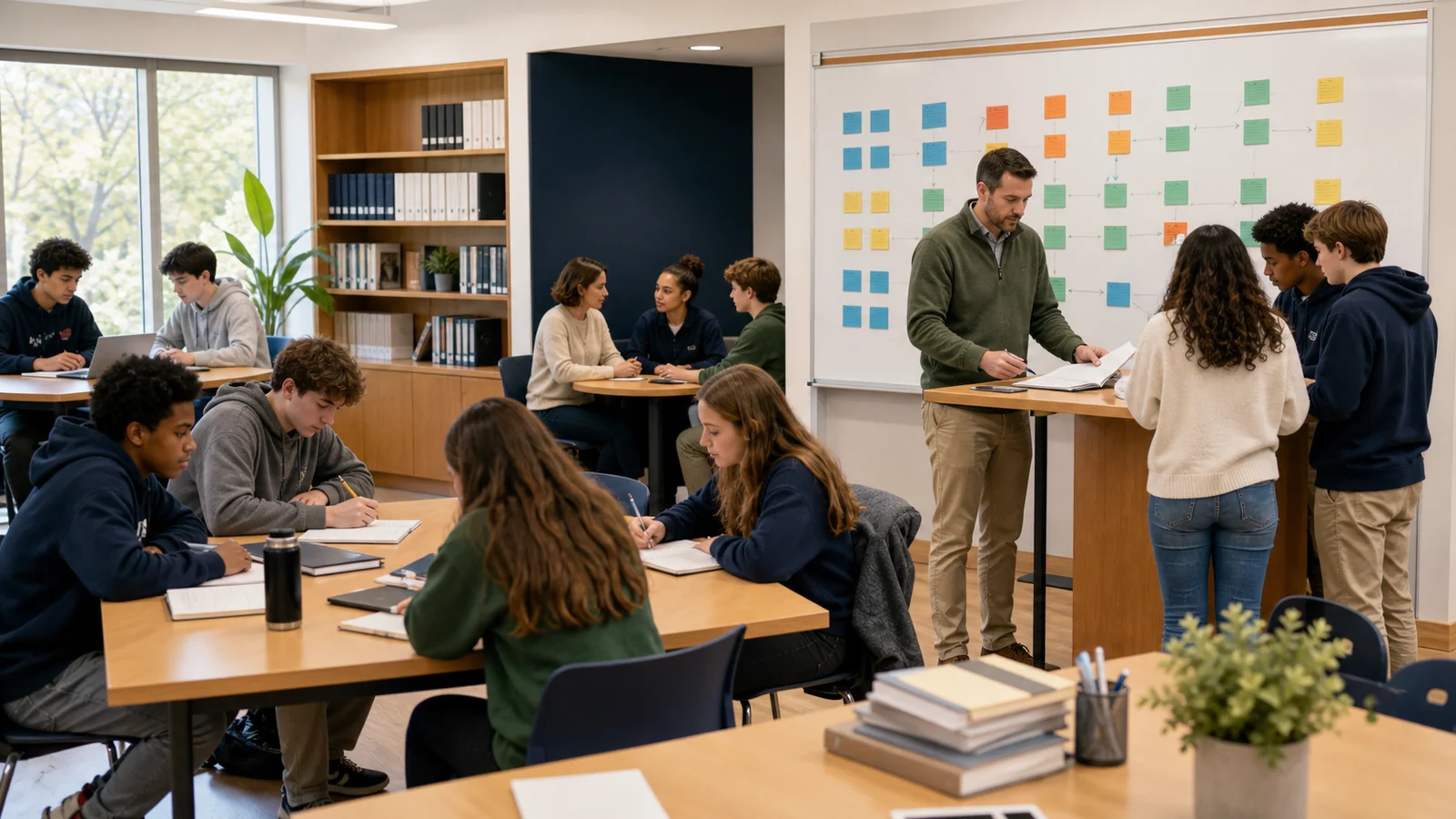
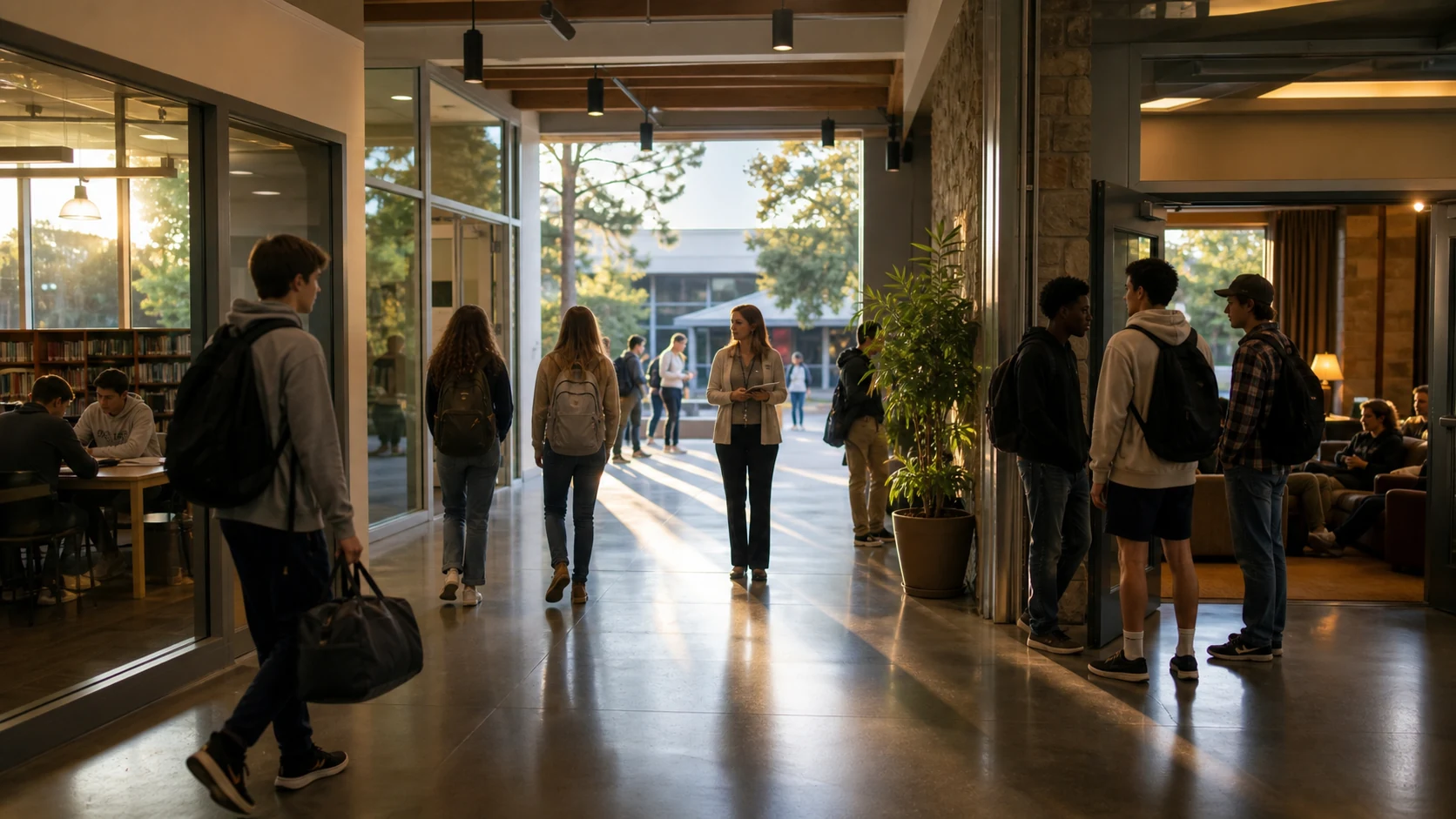
When Boarding School Makes More Sense Than a Day School
Compare boarding school vs day school by what happens after class: commute, evening study, supervision, independence, support, and whether the weekly routine fits your child.
Families usually compare boarding school vs day school by location, cost, and reputation. Those matter, but they are not the cleanest way to start.
The better test is what happens after class ends. A day school sends the student back into the family routine every afternoon. A boarding school keeps more of the week inside one supervised campus rhythm: meals, study time, activities, adult check-ins, roommate life, and weekends. Neither model is automatically stronger. The question is which one matches the child, the household, and the amount of structure the student needs to grow.
If your family is choosing between boarding school or day school, do not begin with the label. Begin with the week.
The Decision Starts After The Bell
A student can have a strong classroom experience and still struggle with the handoff after dismissal. The commute takes time. Activities stretch later than expected. Homework starts when the student is already tired. Parents may not know whether the problem is effort, workload, distraction, missing skills, or a class that has quietly become too hard.
That is where the two models separate.
Day school keeps more responsibility at home. The family manages transportation, meals, homework conditions, screen limits, sleep, and the emotional reset after school. Boarding keeps more of that routine on campus, where adults and peers are part of the same daily structure. This can be helpful when the issue is not one dramatic problem, but a pattern of small frictions that keeps repeating four or five nights a week.
For broad industry context, The Association of Boarding Schools is a useful starting point. For an individual family, though, the more important evidence comes from one ordinary weekday: class, afternoon, dinner, study, sleep, and the next morning.
When Day School Is Still The Better Fit
Day school can be the right answer when home is a stable extension of school. A student may benefit from returning to family each evening, staying connected to local activities, keeping a familiar bedroom, and building independence while parents still see the daily mood changes up close.
That model tends to work best when several things are true at the same time. The commute is reasonable. The student can start homework without a nightly standoff. Parents can tell when a class is going poorly before the quarter is almost over. The family calendar leaves room for sleep. There is enough adult attention at home to help the student reset without turning every evening into supervision.

If that describes your household, a day school may offer the academic environment you want without changing the student's whole living arrangement. The visit questions should focus on classroom placement, teacher communication, homework expectations, activity load, and how quickly the school contacts parents when a student begins to slip.
Boarding Helps When The Week Keeps Coming Apart
Boarding school starts to make more sense when the same weak points keep showing up at home.
The student is capable in class but inconsistent at night. The commute drains the evening. A parent has to restart homework three times before it begins. Activities and assignments compete for the same late hours. The student needs more predictable study time than the household can provide. Or the family wants the student to practice independence with adults nearby rather than jumping straight from home supervision to college dorm life.
In those cases, boarding is not only about where a student sleeps. It is about continuity. The adult who sees the student during the day may also understand what happens during evening study. Patterns can be noticed earlier. Help can be closer to the moment when a student gets stuck. Social life, meals, and study do not have to be rebuilt from scratch every afternoon.
That continuity matters most for students whose problems are easy to underestimate. A missing assignment here, a late start there, a quiet dinner, a tired morning, a weekend spent catching up: none of those moments looks serious by itself. Together, they can define the school year. Boarding is worth considering when the family needs the school to see that full pattern, not only the classroom version of the student.
For families considering ConcordPrep, this is where the conversation should move from general admissions questions to how evenings, weekends, and residential expectations actually work. Ask what the first month looks like, how students are helped through adjustment, and what adults are watching for when a student seems quiet, overloaded, or unusually disorganized.
Look For Continuity, Not Constant Control
A common worry is that boarding school will feel too controlled. That can happen in the wrong fit. But the goal of a good college-preparatory boarding environment should not be to monitor every minute. It should be to make the important parts of the day harder to miss.
Evening study is a good example. The question is not whether the school has a study period on paper. The useful questions are smaller: who is present, what students do when they are stuck, whether phones and distractions are handled clearly, how tutoring gets connected to class expectations, and whether adults notice the difference between a student who is working slowly and a student who is pretending to work.
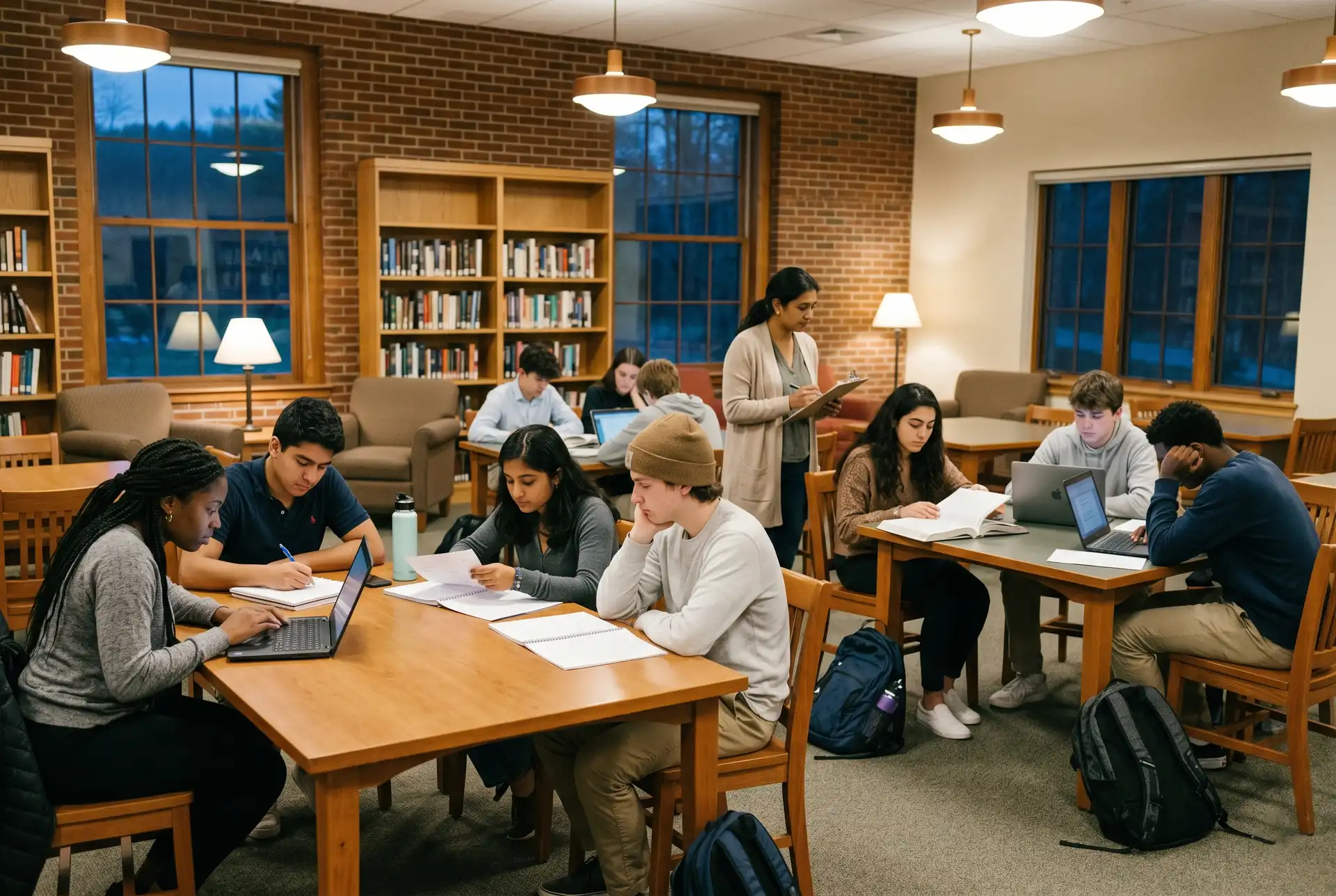
At ConcordPrep, families should connect that discussion with how students can get help before a small academic issue becomes a larger one. A boarding model is only valuable if the support loop reaches the hours when homework, organization, and follow-through actually happen.
The First Independence Test Is Ordinary
Independence is often described in big terms: maturity, leadership, college readiness. In real life, it starts with ordinary habits.
Can the student wake up and prepare for the day without a parent pulling the whole morning forward? Can they keep track of laundry, supplies, emails, assignments, and commitments? Can they ask for help before embarrassment turns into avoidance? Can they live with a roommate, repair a small conflict, and still be ready for class the next day?
Day school can build those habits too, especially when parents gradually transfer responsibility. Boarding simply changes the practice field. The student lives with more of the consequences and more of the support in the same place.
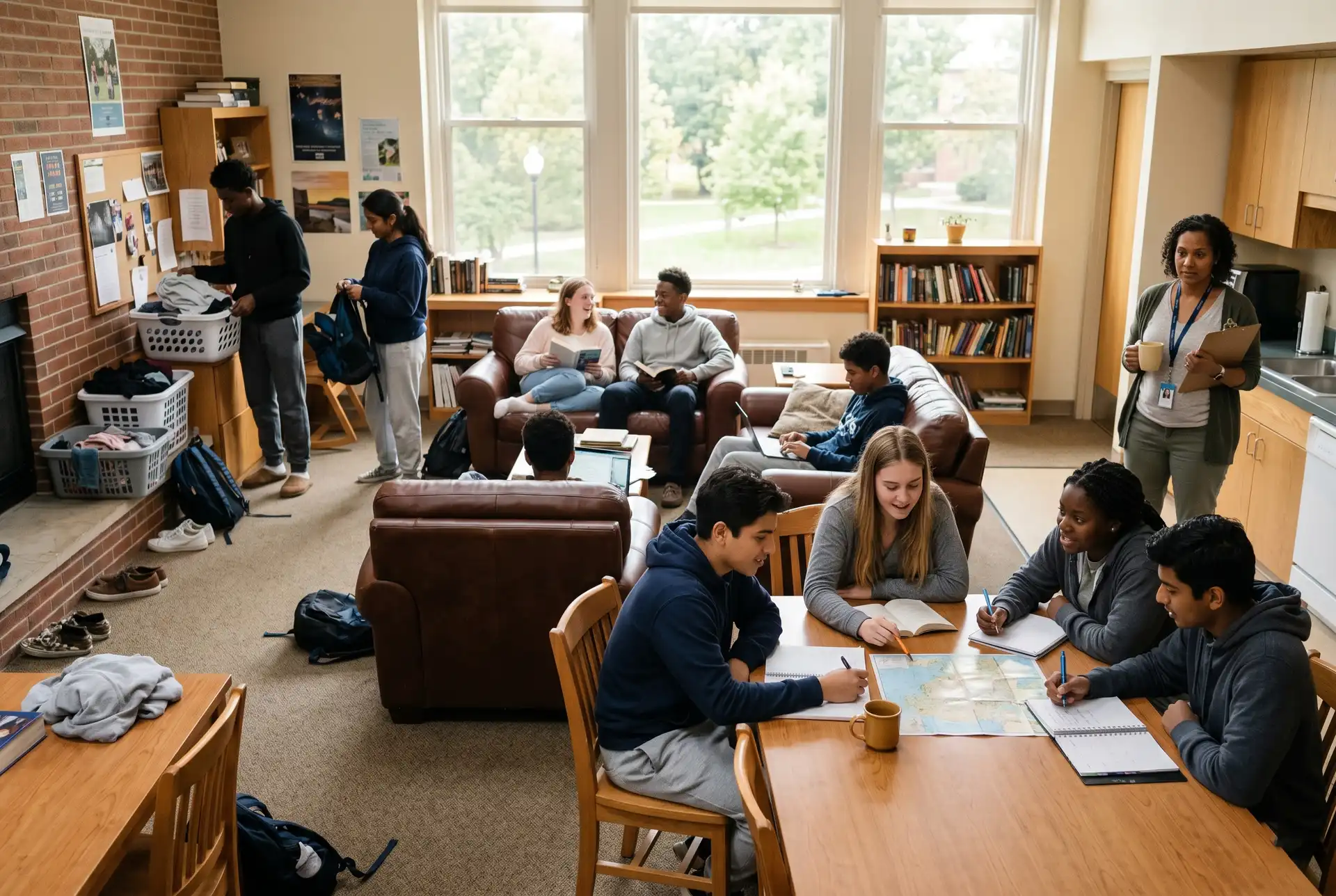
That is why the decision should include the student's temperament. Some teenagers are ready for a larger step and become steadier when the environment is consistent. Others need more time at home before boarding would feel productive. A school visit should help the family tell the difference.
Do Not Use Boarding To Solve The Wrong Problem
Boarding school is not the same as a therapeutic placement, a behavior-correction program, or a crisis response. This distinction matters for both ethics and fit.
If the concern is clinical, safety-related, or primarily behavioral, families should speak with licensed professionals and look at appropriately specialized care. The National Institute of Mental Health offers official context on child and adolescent mental health, which is a different conversation from choosing a college-preparatory boarding school.
This is not a small wording issue. A student who needs clinical treatment should not be pushed into a regular boarding environment because the family hopes structure alone will fix the problem. And a student who needs academic challenge, routine, and guided independence should not be lumped into the wrong search category.
A Visit Should Follow One Weekday From Start To Lights-Out
Many school tours show buildings. For this decision, ask the school to walk you through a Wednesday.
Start with the first class. Then move through lunch, afternoon commitments, dinner, study time, free time, parent communication, lights-out expectations, and what happens if something goes wrong. The goal is not to collect polished answers. It is to hear whether the adults can describe the week with enough detail that your child becomes visible inside it.
The National Association of Independent Schools offers parent-facing context for independent school searches. For boarding school vs day school, the strongest questions are usually practical:
- Where does my child tend to lose momentum after school?
- Would a consistent evening study routine help, or would it feel like the wrong kind of pressure?
- How quickly would an adult notice missed work, homesickness, social withdrawal, or poor sleep?
- What responsibilities would my child need to own in the first month?
- What would parents hear, and when, if the adjustment is not going well?
Those questions are more useful than asking whether boarding or day school is better in general. They force the answer to fit the student.
For ConcordPrep, Ask To See The Week
Concord Preparatory School belongs in this conversation for families who want to compare a smaller college-preparatory high school environment with both academic and residential dimensions. The right fit is not proven by the word boarding. It is proven by whether the school can explain the student's likely week.
If your family is still defining the category, start with the broader guide to what boarding school means in daily life. If the question has already moved to budget, use the cost guide to map tuition, boarding, and family-specific enrollment questions. If your student may benefit from a boarding rhythm, bring the student's current schedule, homework habits, commute realities, and support needs into an admissions conversation or a visit shaped around the school week.
The decision is not boarding school versus day school as an abstract debate. It is whether the student's next year needs a stronger campus rhythm than the family can reasonably build at home.