So, What Actually Counts as a Private School?
Learn what counts as a private school, how private high schools differ by purpose, and how parents can compare day, boarding, college-prep, and support models.
A private school sounds like a simple category until families start comparing real options.
One school is a small college-preparatory high school. Another is a faith-based day school. Another has boarding. Another focuses on learning differences. Another is a therapeutic program that serves a very different need. All of them may appear when a parent searches for "private school," but they are not solving the same problem.
That is why the better first question is not whether private school is automatically better than public school. It is whether a particular kind of private school matches the student, the family routine, the academic goal, and the support the child may need over the next few years.
Private Means Independent, Not Identical
The federal education data definition is intentionally basic. The National Center for Education Statistics describes a private school as one that is not supported primarily by public funds, provides classroom instruction for one or more K-12 grades or comparable levels, and has at least one teacher.
That definition is useful because it separates private schools from public school districts. It does not tell you what the school feels like for a teenager on a Tuesday morning.
A private high school may be highly structured or very flexible. It may be religious or nonsectarian. It may enroll day students only, boarders only, or both. It may be built around college preparation, arts, language, STEM, special education, or a clinical/therapeutic purpose. The label tells you how the school is organized and funded. It does not tell you whether it is the right environment.
The Search Gets Clearer When You Name The Need
Families often begin with a broad phrase because the real concern is still forming. "Private school" may actually mean one of several different questions.
For one family, it means the student needs smaller classes and closer teacher attention. For another, it means the current school is too large and impersonal. For another, it means the family wants a more serious college-preparatory path. For another, the issue is commute, safety, social fit, language support, or a need for more structure outside classroom hours.
Those searches should not lead to the same shortlist.
A family looking for a religious mission should ask about faith formation and community expectations. A family looking for a specialized arts or STEM path should ask how much of the week is actually shaped by that specialty. A family looking for clinical or behavioral help should look for appropriately licensed therapeutic services rather than assuming a regular private school can meet that need.
When the need is academic growth, college preparation, and a more intentional high school setting, the conversation changes. The family should ask how placement works, how teachers notice early drift, how writing and math expectations increase, and how college planning begins before senior year.
Day School And Boarding School Ask Different Questions
A private day school and a private boarding school can both be good options. They ask different things of a student.
Day school keeps the evening largely in the family's hands. That can work well when transportation is reasonable, the student comes home with enough energy to study, and the home routine supports homework, sleep, activities, and family communication. The school day may be strong, but the family still carries the handoff after dismissal.
Boarding changes that handoff. The school week includes housing, meals, study hours, evening expectations, adult supervision, weekend planning, parent communication, and the student's adjustment to living with peers. That can help a student who needs a more consistent routine. It can also be too much for a student who is not ready to live with that level of structure.

If boarding is on the table, read more than the admissions overview. Ask how the weekday actually runs: when students study, who supervises evenings, how weekends are handled, what parents hear about adjustment, and what happens when a student seems fine in class but unsettled after dinner. ConcordPrep's boarding routine and residential expectations are a natural place to start that conversation.
If the family is still deciding whether boarding belongs in the search at all, the existing guide to what boarding school means in daily life is a better next read than a ranking list.
College Prep Is A Claim To Test
"College preparatory" is one of the most common phrases in private high school marketing. Parents should treat it as a claim to verify, not a label to accept.
A real college-prep environment should be able to explain how students are placed, how course rigor increases, how writing improves, how students get help before a grade crisis, and how college counseling builds over multiple years. If the answer stops at advanced courses and a college list, the family still does not know enough.
At ConcordPrep, families can discuss academic readiness through the admissions process, then connect that conversation with the support students can use during the school week and college planning that begins before application season. Those links should not be treated as separate features. For the right student, they belong in one plan: placement, coursework, study habits, advising, and college direction.
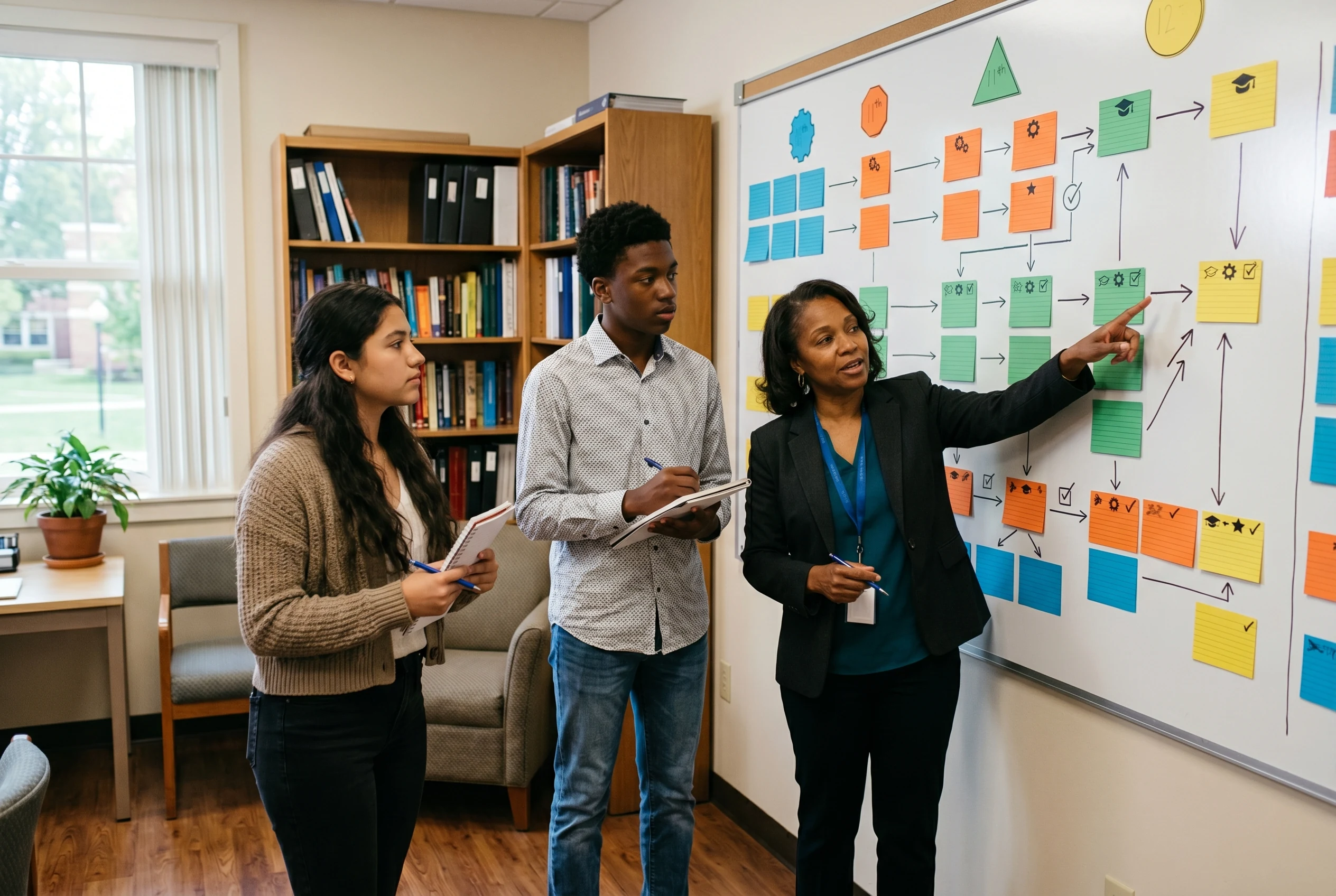
Acceleration needs the same caution. A program with dual enrollment or early college options may be valuable for a prepared student, but it is not a trophy to collect. The student still needs workload control, transcript planning, family communication, and guidance on how high school requirements and college-level work fit together. When early college enters the conversation, ask whether the pathway fits the student's readiness, not just whether the credits sound impressive.
Cost Belongs In The Conversation, But Not Alone
Private school usually means tuition, and tuition has to be discussed plainly. Still, cost by itself can mislead families.
One school may look less expensive but offer less support, less advising, fewer advanced options, or no boarding context. Another may cost more but include a model that better matches the student's daily needs. A family also has to account for application fees, transportation, domestic or international status, financial aid timing, boarding details, and final enrollment terms.
That does not mean the higher price is better. It means price should be connected to a specific student experience. If you are comparing local numbers, use the tuition discussion as a follow-up to fit, not a replacement for it. ConcordPrep families can pair the school's tuition conversation with the existing guide to private high school tuition in Orange County when they are ready to build the family number.
Directories Help You Discover Names, Not Decide
Directories can be useful when a family is first trying to understand what exists nearby. They are weaker once the family needs to make a real enrollment decision.
The California Private School Affidavit information is a good reminder of that boundary. Filing an affidavit is a legal reporting requirement; it should not be confused with state evaluation, approval, recognition, or endorsement. NCES also notes that its private school search data comes from schools that responded to the Private School Universe Survey.
That context matters. A directory result can help a parent find names. It cannot tell whether a student will be known well, placed correctly, supported early, or guided through a realistic college-preparatory path.
Use public data as a starting shelf. Then replace the shelf with direct conversations.
A Better Shortlist Starts With Five Sentences
Before comparing schools, write five unfinished sentences about the student. They will tell you what kind of private school you are really looking for.
- My child needs more of...
- My child needs less of...
- The school week breaks down when...
- The right adult support would look like...
- By graduation, we hope high school has helped my child...
Those sentences are more useful than a generic checklist. They force the search to become specific before the family falls in love with a campus photo, a ranking, or a familiar city name.

Once the need is clearer, ask each school to respond to the student in front of you. How would the first semester be planned? How would placement be reviewed? Where would support enter the week? What would parents hear if the student starts to drift? What part of the school day would help this child grow?
Where ConcordPrep Fits In This Search
Concord Preparatory School fits one particular kind of private school search: families considering a smaller college-preparatory high school environment with academic support, college counseling, boarding context, and an Orange County campus they can evaluate in person.
That does not make it the answer for every private school search. A family seeking a specific religious program, a large traditional campus, a specialized conservatory, or a therapeutic placement should compare different kinds of schools.
For families who want a more intentional high school plan, the next step is not to ask whether private school is better in general. It is to bring the student's real profile into the conversation. Start with the student's current courses, habits, strengths, and worries. Then use a conversation with admissions and, when appropriate, a campus visit built around your child's questions to see whether the school can describe a week that makes sense.
A private school is not one thing. The right one is the school whose structure, adults, expectations, and daily rhythm match the student you are actually trying to help.