Choosing a U.S. Private High School From Abroad Takes More Than an I-20
Compare a U.S. private high school for an international student across admission, placement, visa steps, housing, cost, health, and arrival.
Choosing a private high school for an international student involves two decisions that happen on different clocks. The school decides whether the student is an academic and community fit. U.S. government agencies decide whether the student is eligible to enter in the requested status.
An admission offer may allow the visa process to begin, but it does not replace that process or guarantee its outcome. Families make better decisions when they plan four tracks together: school admission, academic placement, residential life, and immigration and travel logistics.
School admission comes before the visa sequence
The first task is finding a school that can support the student's education and, when needed, issue the appropriate enrollment document. Confirm the school's current international admission process directly before paying application or travel costs.
For an F-1 student, the school must be certified through the Student and Exchange Visitor Program before it can issue Form I-20. The Department of Homeland Security explanation of Form I-20 describes its role in the student process. The U.S. Department of State student visa guidance covers visa applications, interviews, documentation, and entry considerations.
Those sources should be treated as the authority for federal requirements. A school can provide its institutional documents and explain its own enrollment steps. It cannot approve a visa, promise an interview result, or control processing time.
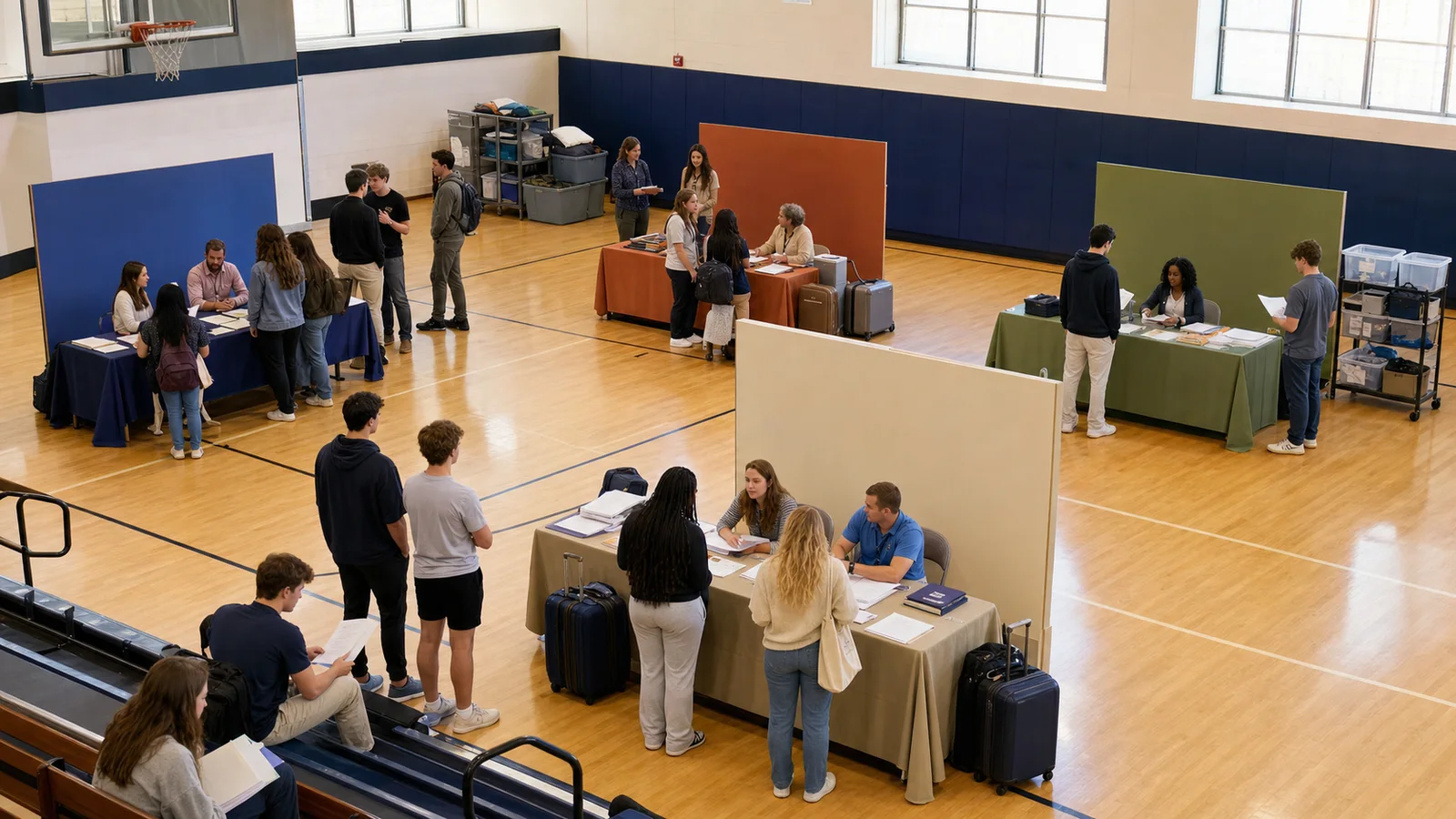
At ConcordPrep, international applicants begin with the current admission requirements and review process. Families should confirm which academic records, recommendations, assessments, financial records, translations, and identity documents apply to the student's grade and intended start term.
Academic records have to tell the same story in a new system
A transcript from another country may be accurate and still need context. Course titles, grading scales, school calendars, credit units, graduation requirements, and the sequence of mathematics or science can differ substantially.
Gather official records early and ask whether certified translations or additional school descriptions are required. Include the most recent work available rather than waiting until every future grade is final. If a term ends after the application deadline, note when the next report will be released.
Language proficiency is only one part of placement. A student may communicate well socially but need time to adjust to analytical writing, seminar discussion, source citation, or subject-specific vocabulary. Another student may have advanced mathematics but need a different course sequence because the previous curriculum organized topics differently.

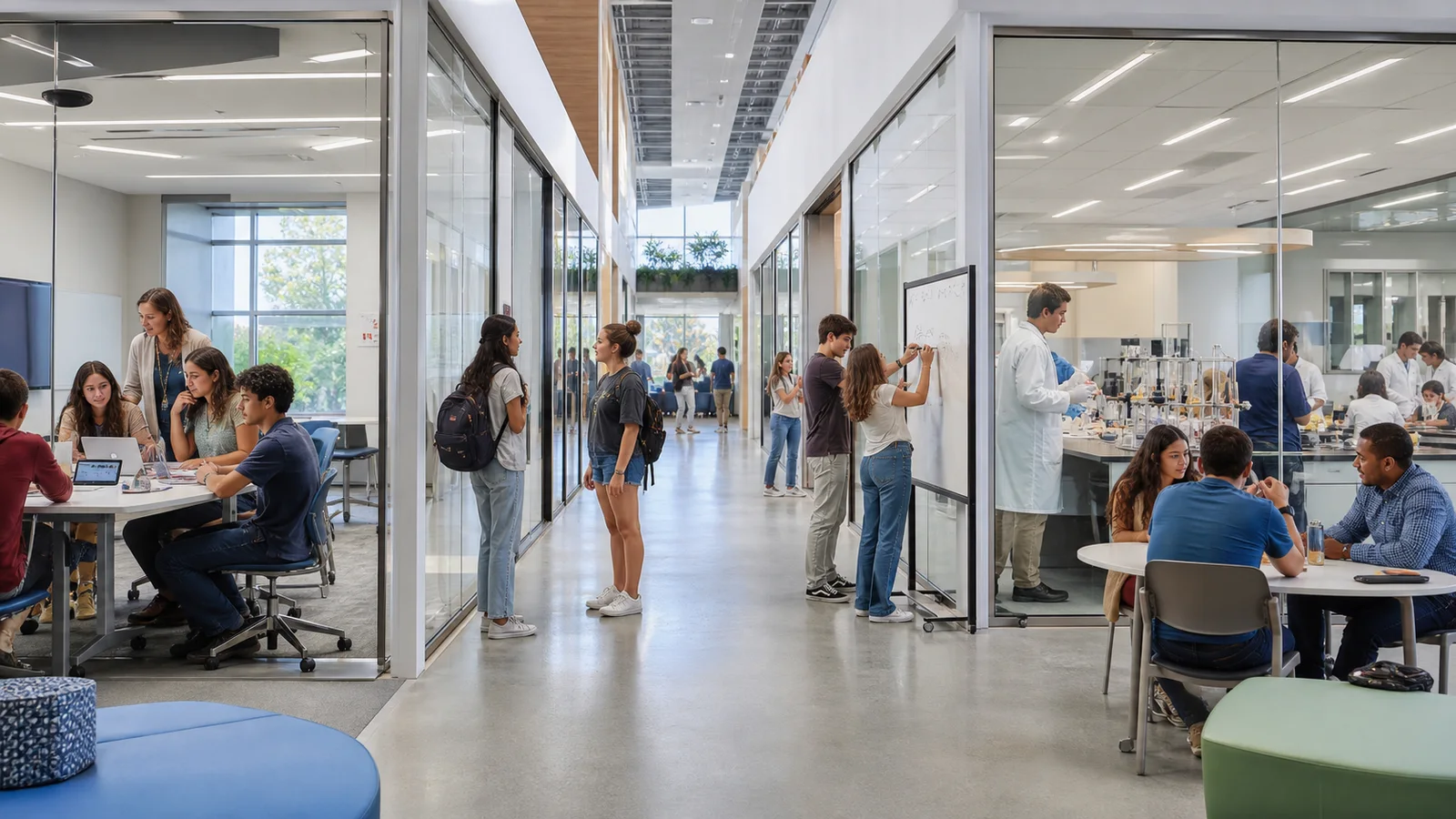
Review the school's current course pathways and ask how an incoming student's prior work is evaluated. When a student may need structured help with writing, study habits, or a new grading system, discuss how tutoring, advising, study sessions, and progress communication actually operate during the first term.
The residential calendar must work for the whole family
Housing is not simply a bed near the classroom. International families need to understand who is responsible for the student after class, overnight, on weekends, during school breaks, and when travel plans change.
Read the annual calendar beside the residential rules. Mark every closure, vacation, early dismissal, move-in window, and final departure date. Then assign a plan for each gap: campus housing, approved host, family travel, or another arrangement accepted by the school.
Time zones change communication as well. A parent may be asleep during the U.S. school day and unavailable when a routine decision is needed. Confirm which local adults may receive information or make limited decisions, how emergency contacts are documented, and how the school communicates academic, health, and residential concerns across time zones.
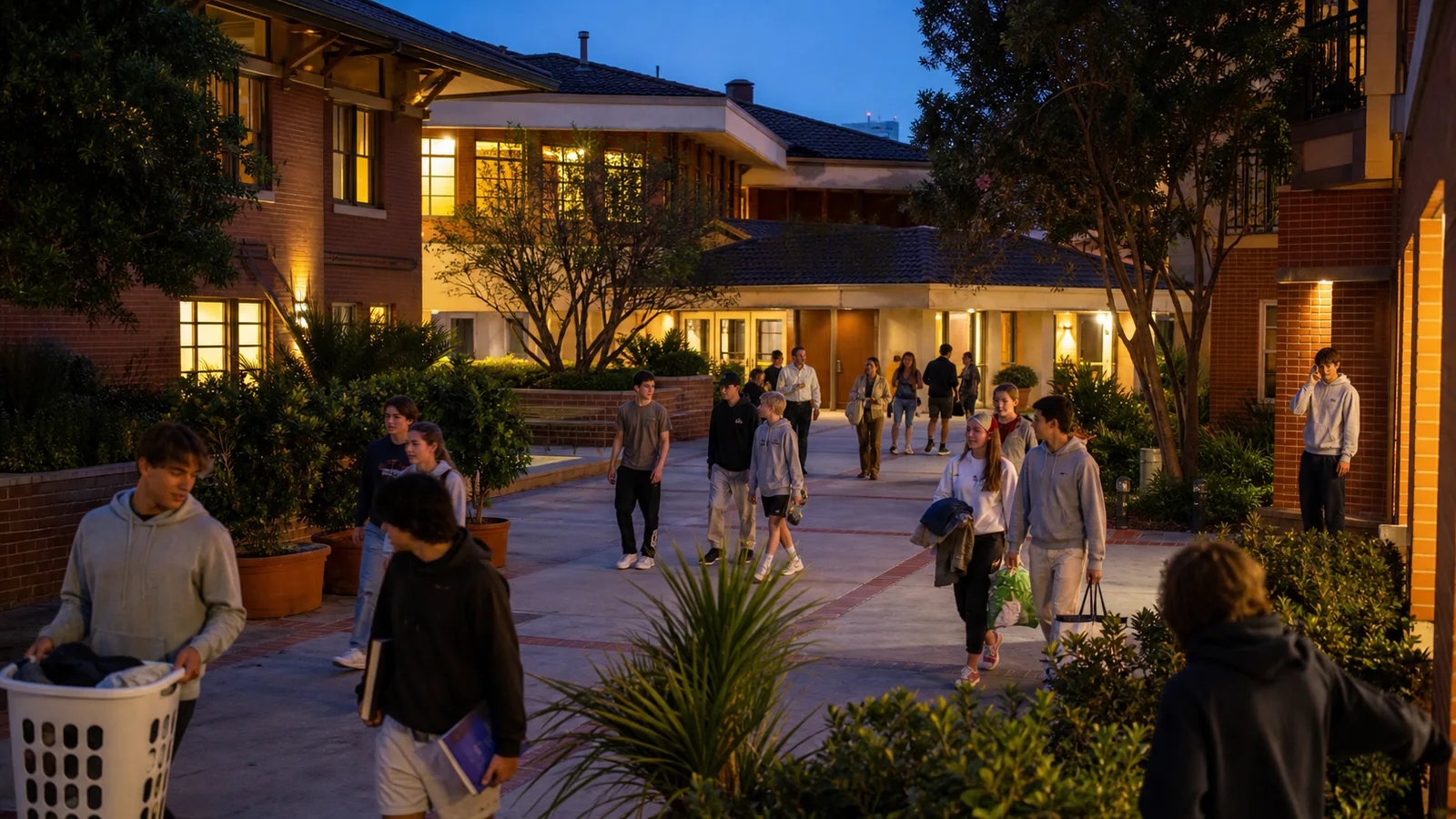
At ConcordPrep, families can examine how study hours, supervision, weekends, leave, transportation, and communication fit into one residential week. Each detail still needs to be confirmed for the student's actual term rather than assumed from a general description.
Build the budget in the currency the family will pay
Published tuition is only one line. International families may also need to plan for housing, meals, health insurance, uniforms, technology, activities, transportation, visa and government fees, document translation, flights, baggage, local spending, and travel during breaks.
Exchange-rate movement can change the real cost even when the school price does not change. Create the budget in both U.S. dollars and the family's home currency. Add a reasonable range for airfare and conversion costs instead of using one ideal booking. Keep emergency travel separate from routine travel.
For 2027–2028, ConcordPrep lists international annual base tuition at $49,000, separate from housing. The international fee breakdown also identifies a $1,800 registration charge, $2,000 I-20 processing fee, $5,000 non-refundable tuition deposit, and required health insurance. Confirm how the deposit is applied; it should not be added to a total without understanding the enrollment terms.
Self-arranged housing is not automatically free of school charges. For international students under 18, the published compliance and safety-management fee is $2,600 per school year, with a $600 re-review fee for a host-family or local-address change. ConcordPrep’s school financial aid is limited to domestic students. Match all charges to the student’s academic year and circumstances. The broader breakdown of boarding expenses beyond tuition can help identify categories that otherwise appear after enrollment.
Health, medication, and consent cannot wait for move-in
A student arriving from abroad may need time to obtain, translate, or update immunization records and health forms. Families should also understand how insurance works near campus, which clinics or hospitals may be used, and who can consent when a parent is in another country.
Medication requires a school-specific plan. Confirm whether medication is stored by health or residential staff, what prescription documentation is required, how refills are obtained in the United States, and whether an equivalent medication is available. Do not pack a large supply without checking U.S. travel rules and the school's procedure.
For California enrollment, review the current state immunization requirements for TK-12 students. The school can then clarify how those requirements apply to the student's records and arrival date.
Arrival needs a handoff plan, not only a flight number
The travel plan should cover the entire path from the departure airport to the student's room. Record the arrival airport, permitted arrival window, pickup contact, backup contact, baggage plan, local phone access, and what the student should do if a flight is delayed or immigration processing takes longer than expected.
Put essential documents, allowed medication, school contacts, one change of clothes, and basic toiletries in carry-on baggage. Keep copies in a separate secure location. The student should know which document may be requested at each stage and should not rely on a parent carrying everything in another line.

The first six weeks need their own communication rhythm
The first weeks may combine jet lag, language fatigue, unfamiliar food, roommate adjustment, a new grading system, and the ordinary difficulty of being new. A daily family call can sometimes make the transition harder; complete silence can hide a problem.
Agree on a realistic contact rhythm before arrival. Decide what the student can solve independently, what should go to an advisor or residential adult, and what requires immediate parent involvement. Make sure the student knows how to ask for academic help before one missed assignment becomes several.
Families can also read how the hours after class are structured. For an international student, those hours are where academic adjustment, meals, friendships, homesickness, and help-seeking all meet.
Put the four tracks on one arrival map
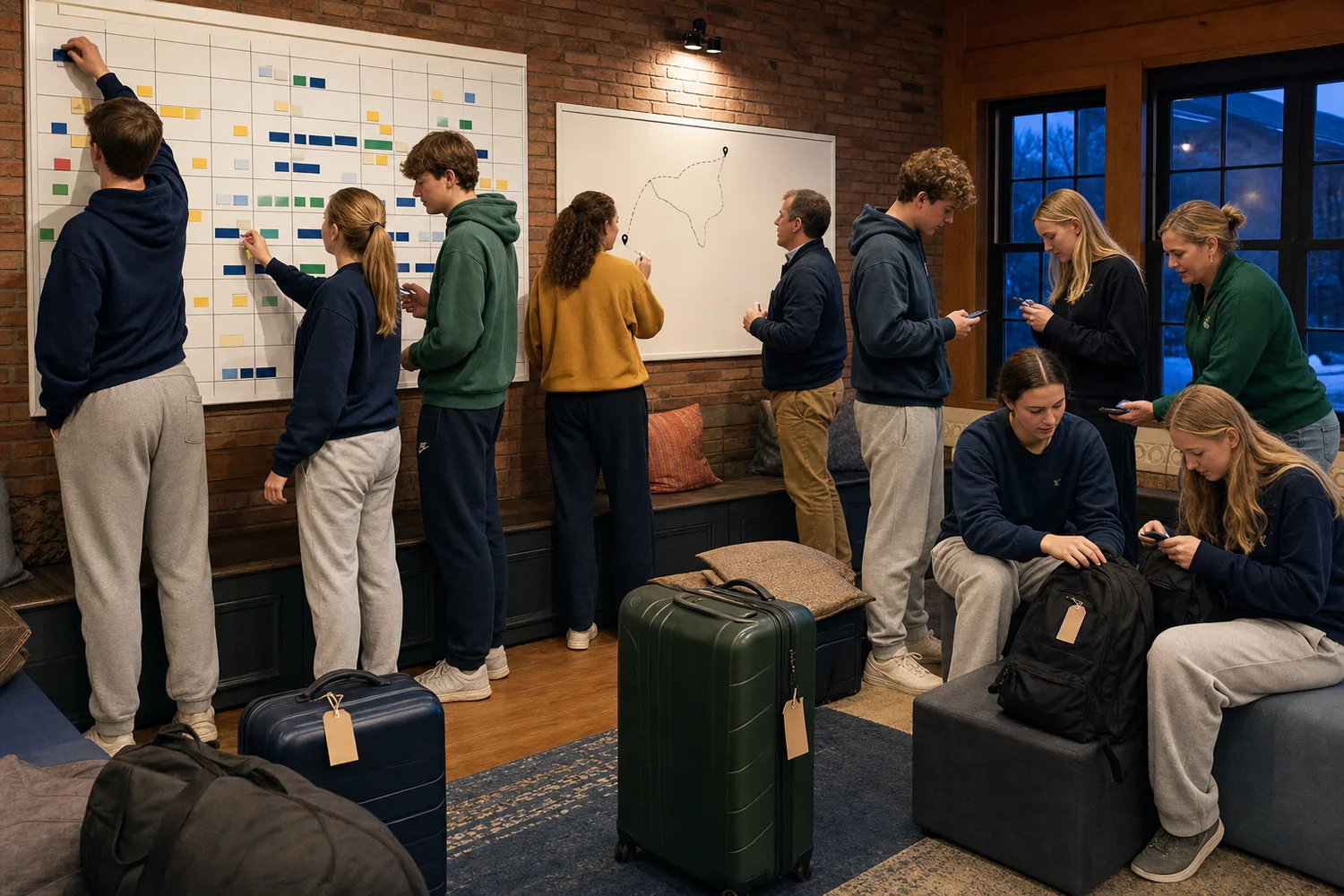
Create one page with four lanes: school, immigration, residence, and travel. Under each lane, list the next action, owner, due date, evidence of completion, and backup contact. Keep official government instructions separate from school guidance so the family always knows which source controls the answer.
The plan is ready when the student can explain it too. They should know what has been approved, what remains pending, where they will live during breaks, who meets them after arrival, how they reach an adult, and what to do when the original plan changes.
A private high school can provide a strong academic and residential environment for an international student. The decision becomes safer and more realistic when admission is evaluated as one part of a larger cross-border transition, not as the finish line.