
The First Phone Call From Boarding School May Not Mean What You Think
Boarding school homesickness can sound final during one difficult call. Learn how families can validate the feeling, gather context, and involve campus support.
The first difficult phone call from boarding school often arrives at the least informative time of day. Classes are over. The dining room is noisy. A roommate may be out with new friends. Home is suddenly quiet enough to picture in detail.
A student says, “I want to come home,” and a parent hears a verdict on the entire school.
It may be a verdict. More often, it is one moment in a transition that has not settled yet. Boarding school homesickness deserves attention, but it also needs context: what happened before the call, what the student did afterward, and whether the difficult moments are beginning to crowd out sleep, learning, meals, and relationships.
The first call carries only part of the day
A homesick student usually calls from the part of the day that hurts. Parents rarely receive a live report from the class discussion that went well, the joke at lunch, or the ten minutes when a dormmate helped find a missing charger. The call can be completely honest and still be incomplete.
Start with the scene. Ask where the student is, what happened in the hour before the call, and what comes next tonight. Those questions are easier to answer than “Do you hate it there?” They also reveal whether the feeling followed a specific disappointment, an empty stretch of time, exhaustion, conflict, or a broader pattern.
The distinction matters because a hard evening calls for comfort and a next step. A repeated pattern may call for adult observation on campus. Neither response requires a parent to dismiss the feeling or decide the school year during one conversation.
Name the feeling before trying to fix it
Homesickness is not evidence that a teenager lacks maturity. An American Academy of Pediatrics clinical report indexed by PubMed describes homesickness as a common response to separation and identifies unfamiliarity, limited prior time away, and low control over the decision as meaningful risk factors.
That gives parents a better opening than “You will be fine.” Try reflecting the specific loss: the student misses the family dog at night, does not know where to sit at breakfast, or feels tired from speaking English all day. A precise feeling is easier to work with than one large conclusion about boarding school.
Keep home close without making campus feel temporary
Contact with home should be dependable, but constant negotiation can keep a student psychologically packed. If every call ends with “We can pick you up tomorrow,” the student has to evaluate departure before learning whether tomorrow feels different.
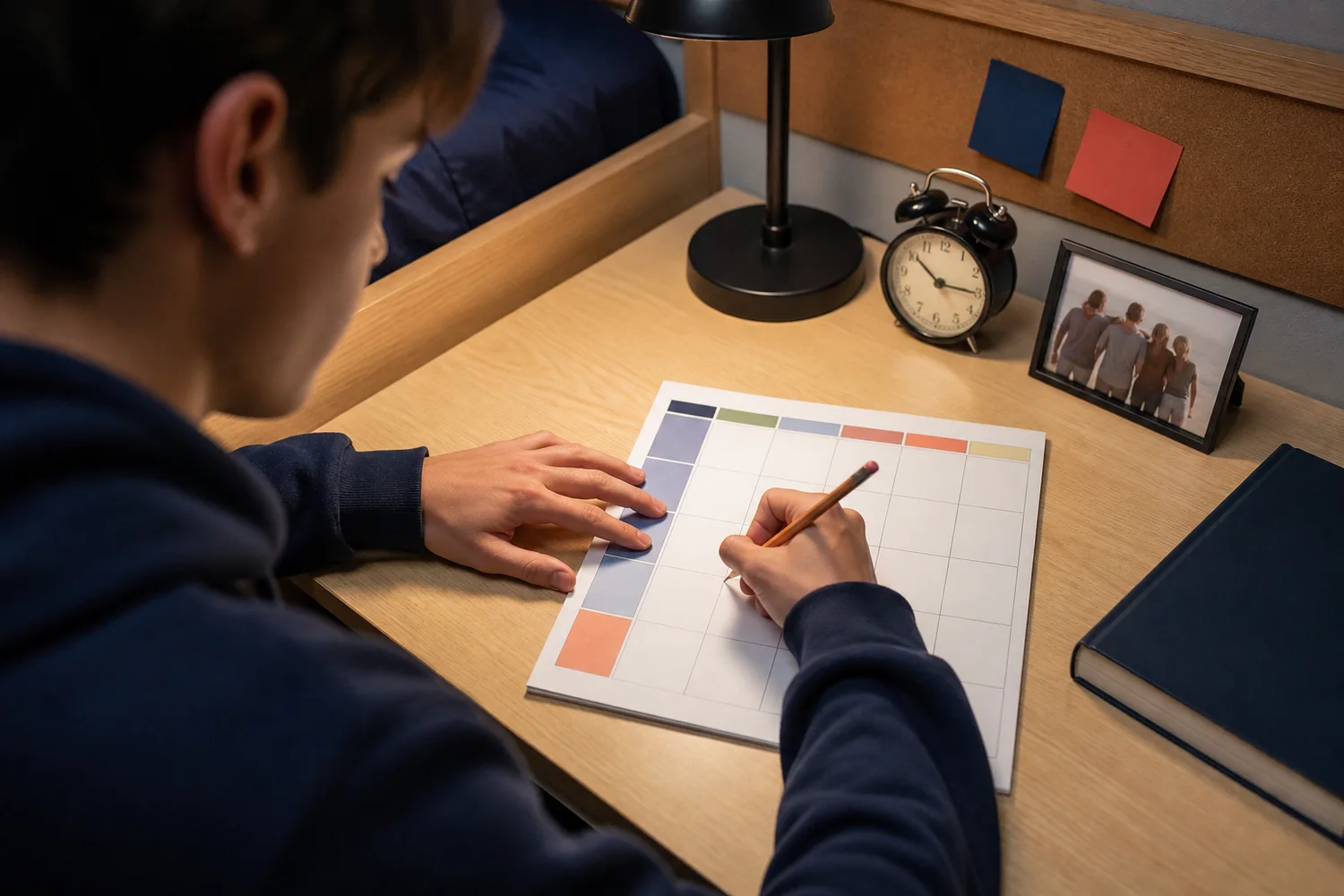
Set a communication rhythm before emotions choose one for you. That might mean a short evening text, two longer calls each week, and an agreed way to reach an adult for urgent concerns. School phone policies, time zones, activities, and study periods should shape the plan.
The Child Mind Institute recommends beginning with validation when a teenager is anxious about leaving home, then moving into problem-solving when the student is ready. In practice, that can sound like: “I hear that dinner felt lonely. Who could help you figure out tomorrow’s seating?” Comfort comes first; the next action stays small.
Families still need a clear emergency path. Homesickness should never be used to explain away a report about safety, bullying, health, harassment, or severe distress. Know which residential adult is on duty and how after-hours concerns are handled.
The school needs the useful version of the story
“My child is miserable” communicates urgency, but it gives staff little to observe. Share details they can act on: three skipped breakfasts, two nights of poor sleep, a roommate conflict, repeated calls after evening study, or withdrawal from an activity the student had wanted to join.
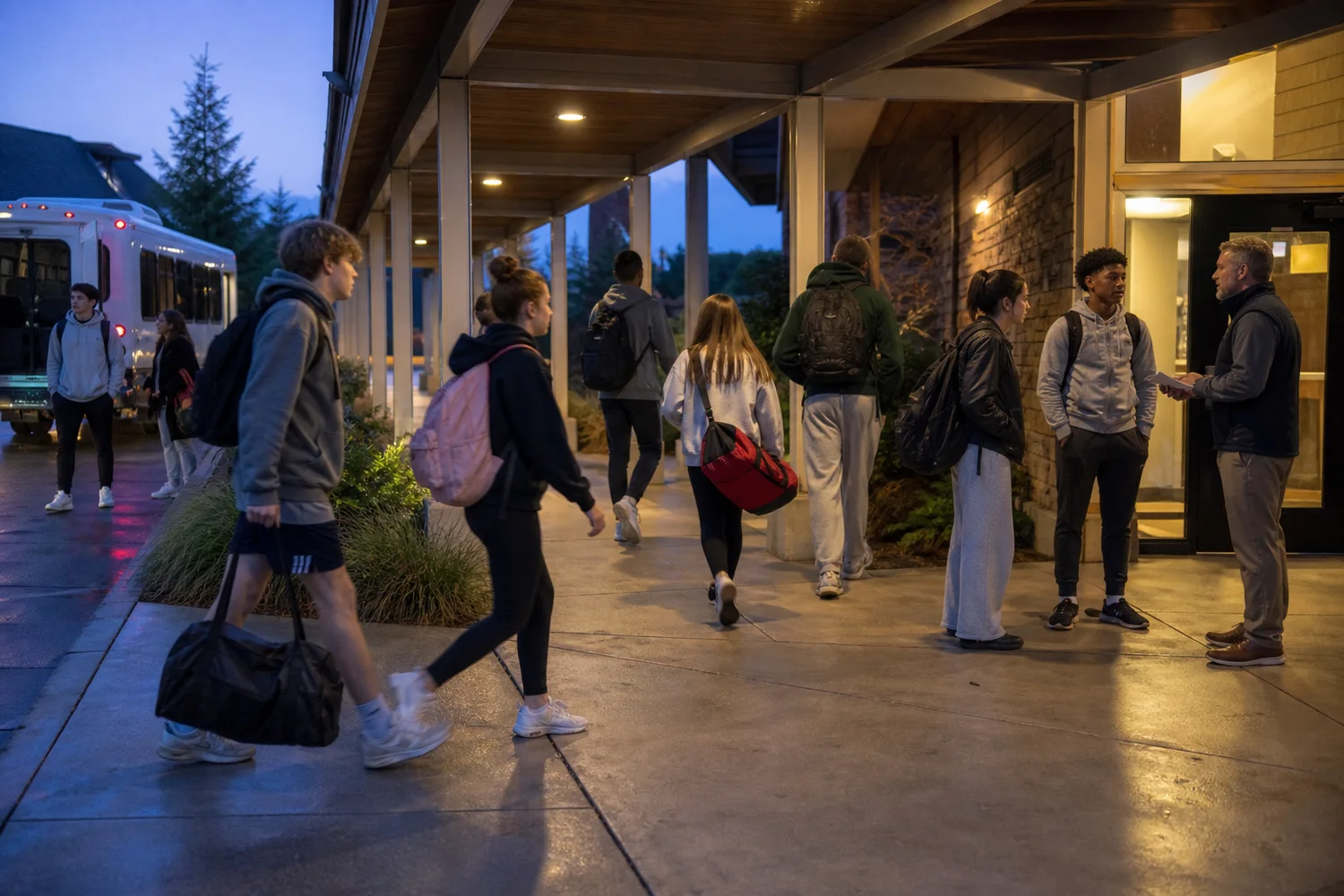
At ConcordPrep, residential life includes supervised evening time, coordinated meals, transportation, health support, weekend programming, and parent communication. Those touchpoints allow different adults to notice different parts of the adjustment. A dorm staff member may see bedtime habits; a teacher may notice concentration; an advisor may see a change in participation.
Ask staff what they have observed rather than asking them to confirm the conclusion from home. A student who sounds devastated at 9:30 p.m. may be participating normally all day. Another student may say very little to parents while quietly missing meals and avoiding peers. Both accounts matter.

A rough evening is different from a shrinking life
Look for direction, not a flawless mood. Early adjustment can include tears, awkward meals, fatigue, and second thoughts while the student is still attending class and gradually building connections.
A closer conversation is warranted when the student's world keeps getting smaller. Examples include:
- sleep or appetite changes that persist rather than easing;
- regularly missing class, study time, meals, or required activities;
- withdrawing from peers and trusted adults across several settings;
- a steep change in schoolwork, hygiene, medication routines, or communication;
- statements about self-harm, hopelessness, feeling unsafe, or being unable to cope.
These are not diagnoses, and a blog cannot determine the right response for an individual student. They are reasons to contact the school promptly and involve an appropriate health or mental health professional when needed.
Boarding support crosses the dorm and classroom
Homesickness does not stay neatly inside residential life. A student who sleeps poorly may miss assignments. A difficult course placement may make the entire school feel wrong. An empty weekend can feel heavier than a full weekday.
This is why the student's hours after class matter as much as the dorm room. Evening study, activities, meals, device routines, and the availability of adults shape how much unstructured isolation a new boarder experiences.
Academic strain may need a separate response. At ConcordPrep, study and academic support options create places to address course placement, missed work, tutoring, and study habits without treating every academic problem as a residential problem.
Agree on the next checkpoint, not the final verdict
End the conversation with a specific checkpoint. Decide what the student will try before then, which adult on campus will know what is happening, and what evidence would mean the plan needs to change. The checkpoint may be tomorrow after breakfast, after a weekend activity, or at the end of a full school week.
A useful first-month agreement can fit in four sentences: when home will call, whom the student will contact on campus, what the family will not decide during a late-night conversation, and which safety or health concerns require immediate escalation.
For families still considering boarding, this is part of understanding what living at school actually requires. Independence does not mean managing distress alone. It means learning to recognize a difficult moment, use the adults and routines available, and review the situation with better information than one phone call can provide.