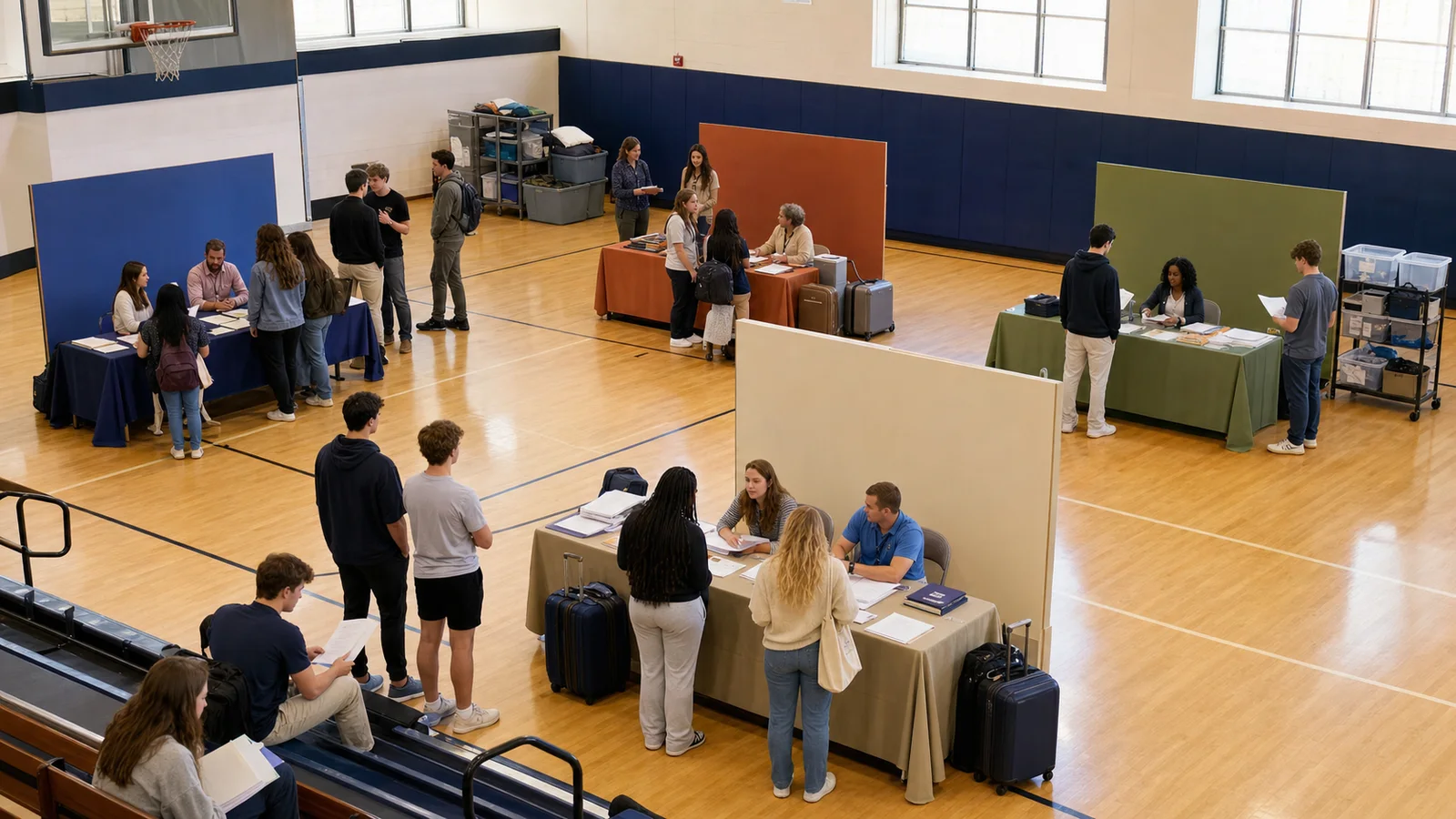
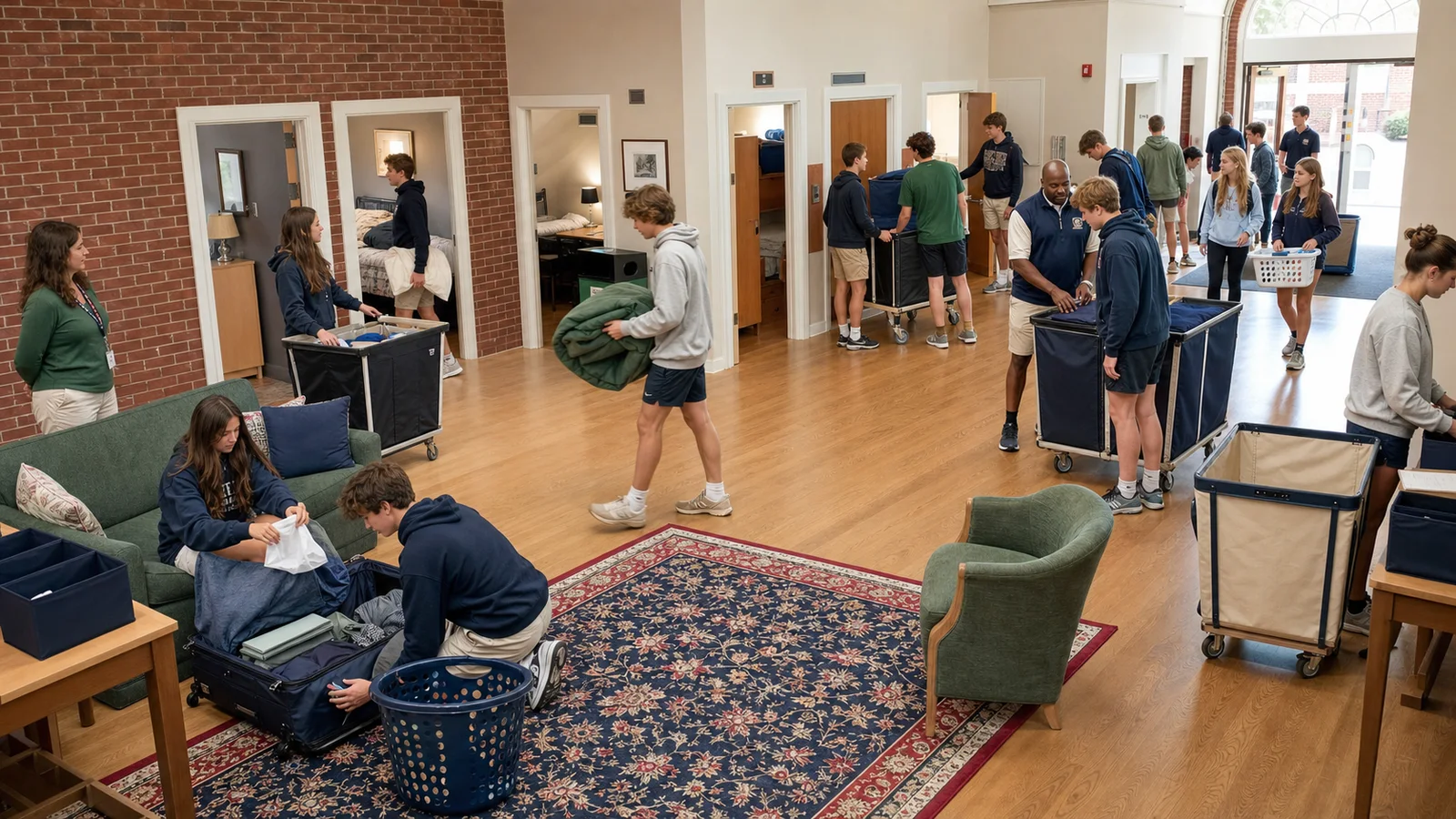
What to Pack for Boarding School After You Read the Dorm Rules
Build a boarding school packing list around dorm rules, storage, laundry, documents, travel, electronics, and the student‘s first working week.
A boarding school packing list can become enormous in about ten minutes. Add bedding, clothes, school supplies, electronics, toiletries, medicine, sports gear, laundry supplies, and a few comforts from home, and suddenly the student appears to need a moving truck.
That usually means the list started in the wrong place.
Before buying bins or filling suitcases, find out how the residence actually works. Room dimensions, storage, laundry access, climate, electrical rules, medication procedures, dress expectations, and weekend transportation all change what belongs in the room. The best list is not the longest one. It is the one that fits the school, the trip, and the student's ability to manage what arrives.
Begin with the room you are moving into
A dorm room photograph rarely answers the practical questions. Two rooms in the same building may have different layouts. A student may have a closet but little drawer space, a desk but no room for a second organizer, or shared laundry that makes a two-week clothing supply unnecessary.
Ask for the current residential packing guidance before shopping. Confirm what the school provides, what roommates share, and what the residence does not allow. At minimum, the family needs answers about:
- bed size and whether linens, pillows, or blankets are provided;
- closet, drawer, under-bed, and suitcase storage;
- laundry machines, detergent rules, and laundry frequency;
- approved lamps, power strips, fans, kettles, and other appliances;
- room decorations, wall fasteners, candles, and fragrance devices;
- bathroom setup and whether students carry toiletries to a shared space;
- sports equipment, musical instruments, and oversized-item storage.
Those details prevent the most common move-in problem: bringing useful things that have nowhere to go.
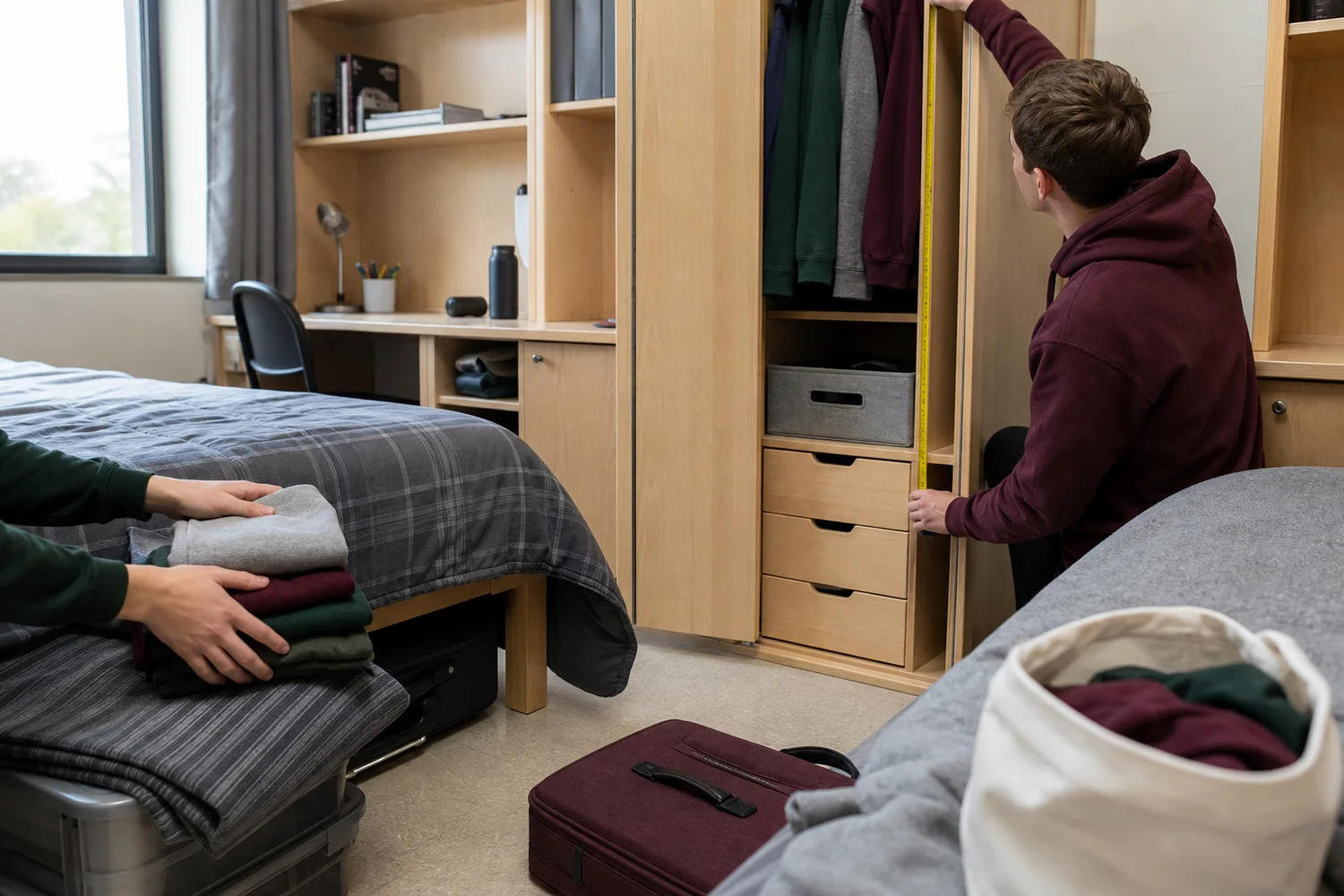
Pack one working school week first
Start with the items a student needs to complete an ordinary Monday through Friday. This is easier to test than an abstract master list.
Picture the student waking up, getting dressed, attending class, changing for an activity, completing evening study, showering, preparing for bed, and doing laundry. If the packed items support that sequence, the basics are probably covered. If an item has no clear place in the week, it may be optional.
| Pack now | Confirm first | Usually wait |
|---|---|---|
| Daily clothing, sleepwear, activity clothes, shoes, toiletries, school bag, chargers | Bedding size, uniforms, formal clothing, sports equipment, laundry supplies | Extra furniture, large organizers, appliances, printers, bulky decorations |
| Required health and enrollment documents kept in a secure travel folder | Medication storage, health office procedures, insurance copies, emergency contacts | Large quantities of over-the-counter products or unapproved supplements |
| A small amount of familiar comfort: photographs, one blanket, a favorite book | Wall-display rules and the roommate's use of shared surfaces | An entire bedroom recreated in boxes |
This approach also makes the first unpacking easier. A student can find what they need without turning every morning into a search through four containers.
Southern California still has seasons inside the week
Costa Mesa is not a four-season boarding destination, but that does not mean one temperature all day. A cool morning, warm afternoon, air-conditioned classroom, evening activity, and coastal breeze can all happen within the same schedule.
Light layers work harder than one heavy wardrobe. A sweatshirt or light jacket, rain protection, comfortable walking shoes, athletic clothing, and a modest range of warm-weather pieces usually create more flexibility than packing every possible outfit. School dress requirements and planned formal events may add specific items, so the current student handbook should settle those decisions.
Do not pack the entire year at once when the student can receive a later shipment or shop locally. The first month will reveal which clothes are actually worn, which activity becomes important, and what the room can hold without becoming cluttered.
Documents and medication belong in a separate plan
Clothing can be replaced. A missing signed form, prescription detail, identification document, or health record can interrupt arrival.
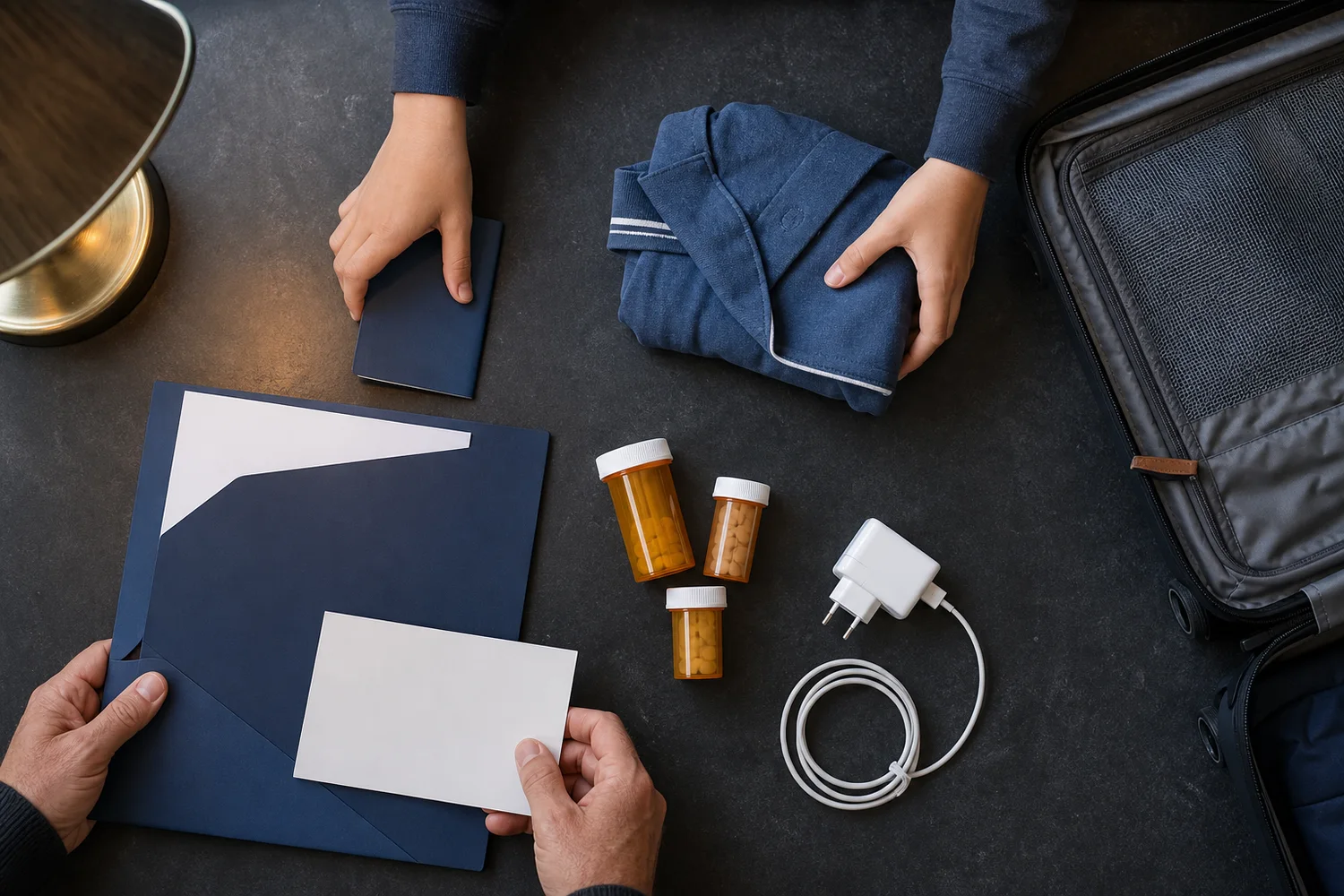
Keep essential documents together and accessible to the responsible adult during travel. The folder may include copies of enrollment instructions, identification, insurance information, immunization records, prescription information, emergency contacts, housing contacts, and travel details. The exact set depends on the student's status and the school's current requirements.
Medication should never be packed by guessing. Confirm who stores it, who may administer it, whether the student can carry any doses, how refills work, and what documentation the school requires. California schools check immunization records for new admissions and transfers, so families arriving from another state or country should review the current California school-entry requirements early enough to resolve missing records.
For students flying to campus, travel rules create another layer. The Transportation Security Administration's current carry-on and checked-bag guidance explains screening considerations for medication, liquids, batteries, and other items. Airline baggage limits still need a separate check before departure.
Electronics need rules before they need accessories
A laptop and phone may be essential. The fourth charging cable, gaming console, monitor, speaker, printer, and collection of adapters may not be.
Check the residence's current technology expectations: device check-in, quiet hours, internet access, approved power strips, gaming equipment, printing, and storage for valuable electronics. Then pack only what supports classwork, communication, and the student's real free-time habits.
Label chargers and small equipment discreetly. Record serial numbers for expensive devices. Decide how the student will secure passports, cash, cards, and other valuables. Boarding offers more independence, but shared space still rewards simple systems.
Bring enough home to feel grounded, not enough to avoid the new place
A familiar object can help a student settle: a few photographs, a well-used blanket, a favorite mug if permitted, a book, or one small item connected to home. These objects give the room a personal anchor without consuming it.
The student also needs space for the life that has not happened yet. New books, team clothing, club materials, gifts, and ordinary clutter will appear during the year. An overfilled room on move-in day leaves no room for any of that.
Parents can involve the student by assigning ownership of one suitcase or category. Let the student decide how everyday clothing is organized, where school materials will live, or which comfort item matters most. Packing then becomes the first small practice in managing residential life.
The arrival bag should survive a delayed suitcase
For air travel, prepare one carry-on as if checked luggage might arrive the next day. It should hold the items the student cannot comfortably replace overnight: documents, allowed medication, essential electronics, one change of clothing, basic toiletries within travel limits, and the contact information needed after landing.
This is especially important for international students and anyone connecting through multiple airports. Travel planning, airport pickup, housing arrival, and the first school-day schedule should connect on one page. Families can map those decisions against the full range of boarding costs and travel variables so the logistics remain inside the real budget rather than becoming an afterthought.
Do a floor test before closing the suitcases
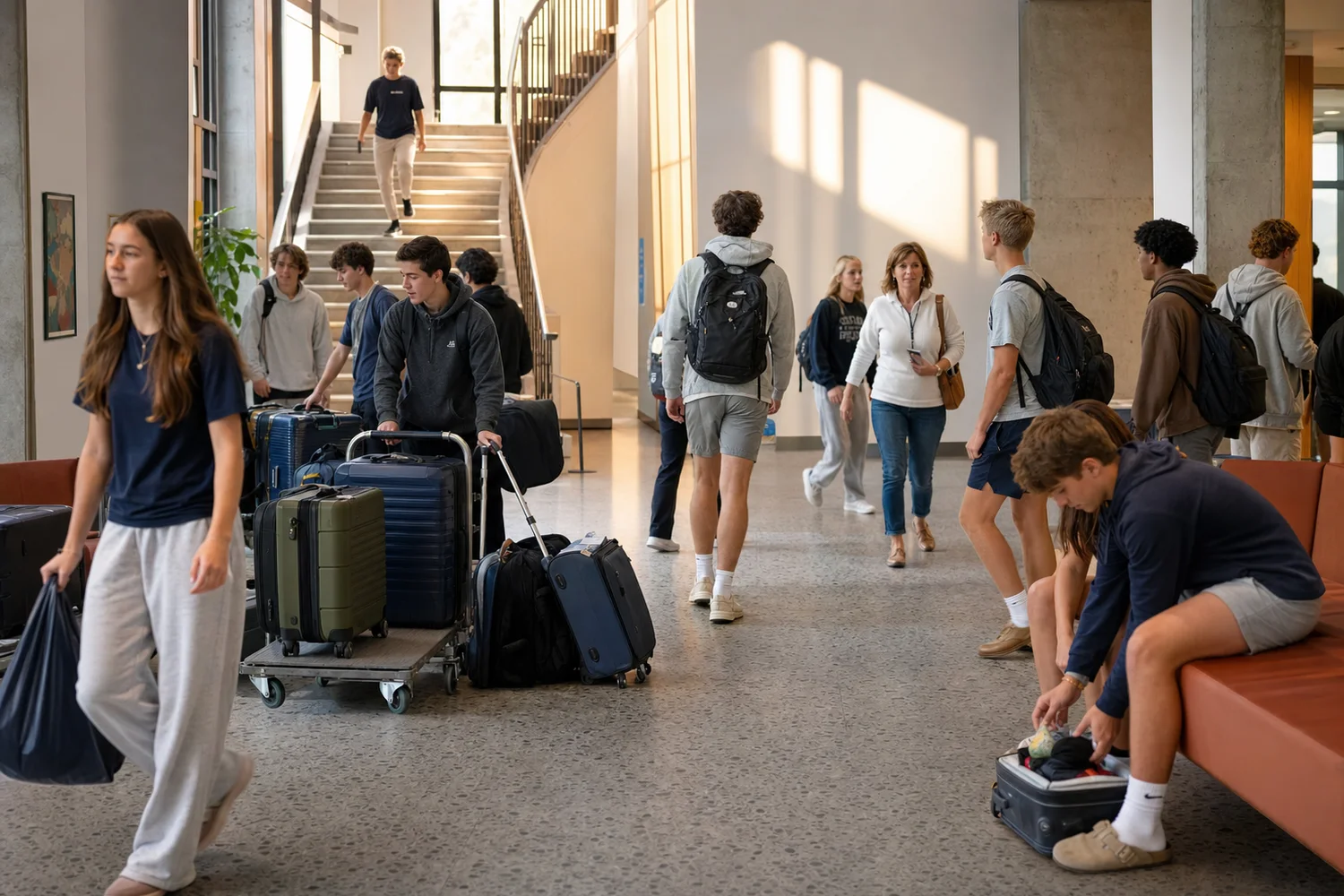
Place everything on the floor in five groups: daily use, weekly use, school-required, travel-critical, and optional. Anything that does not fit a group needs a reason to travel.
Then remove duplicates. Reduce clothing to what the laundry rhythm can support. Set aside anything the school has not approved. Put the first-night items in one bag. Photograph the final layout so the student knows what was packed and where.
At ConcordPrep, life in the residential program connects study time, meals, supervision, weekends, and family communication. For a broader view of how housing connects to academics and independence, families can first consider what boarding school changes in a student's week, then decide which possessions actually support that week.
A good boarding school packing list is finished when the student can manage it. If they can find the essential items, keep the room usable, handle laundry, protect important documents, and explain what still needs to be confirmed, the list has done its job.